Onomichi: the town that wouldn't flatten

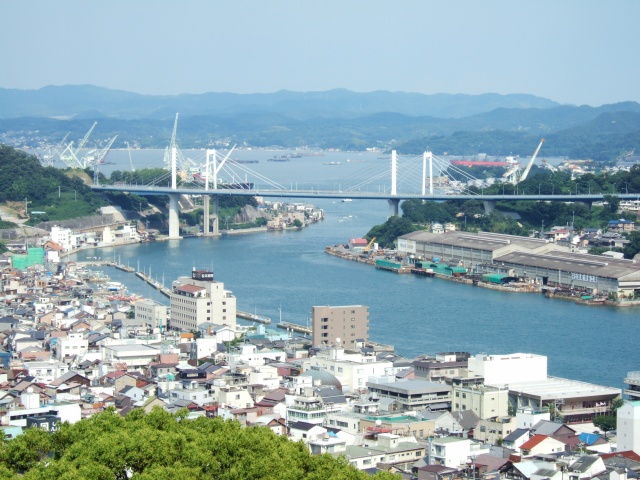

Onomichi is a town that refused to be convenient. That’s the whole story, and sixty years of Japanese postwar planning couldn’t overwrite it. The hillside was too steep, the alleys were too narrow, and eventually the money for demolition went somewhere else. What remains is one of the few places in the country where a slope still dictates how people move.
I haven’t been there. I’ve been reading about it for three weeks, which is how I know that the reading won’t be enough, that the thing I keep circling is something no photograph can carry: the specific angle of those stone staircases, the way they connect houses to temples to alleyways without ever widening into a road a car could use. Onomichi’s slope rises from the shore, facing south toward the Seto Inland Sea, and the only way up is on foot, the same paths that were laid when the port was still moving rice across the strait.
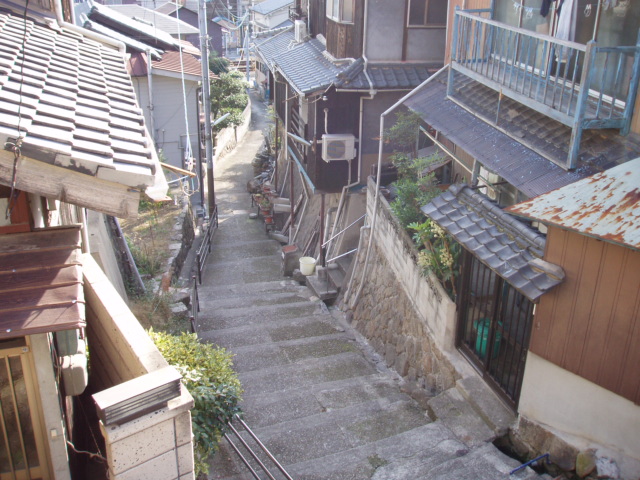

Twenty-five temples sit scattered across that slope, threaded by a walking route the city calls the koji meguri, the old-temple circuit. Senkō-ji sits at the top, reachable by a ropeway built in 1957 that still makes the climb in three minutes. The temples are not a district. They are the connective tissue of the hill, built into it over centuries because flat ground in Onomichi was for commerce, not worship. The slope was what was left, and it turned out the slope was the better offering.
There’s a second path up there, narrower and harder to find: the Bungaku no Komichi, the Literary Path. Twenty-five stone monuments bearing lines from writers who lived here or set work here. Fumiko Hayashi came to Onomichi at thirteen, her family dragging her between towns until they finally stopped here. She stayed through high school, and the town surfaced years later in Hōrōki, her diary of a vagabond. Naoya Shiga spent two years here writing An’ya Kōro, Dark Night’s Passing, in a rented room looking down at the strait. The plaques don’t explain. They just give you the line, the stone, and the view the writer had when they wrote it.
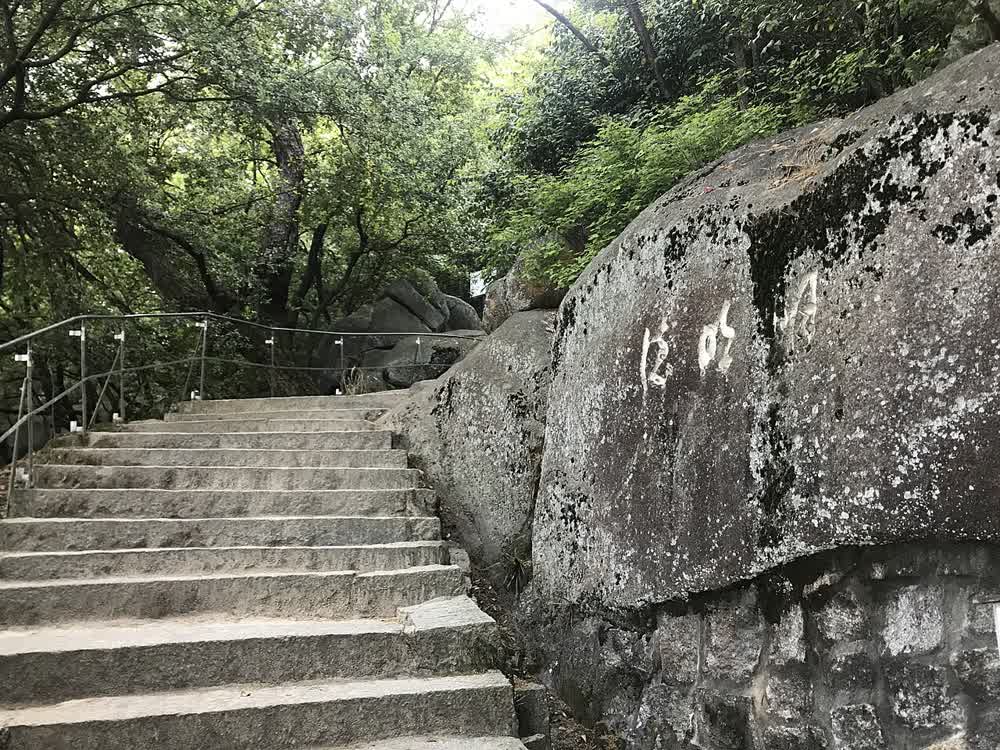

What I can’t stop thinking about is that both of them left. Most of the writers left. But the plaques are there because Onomichi was the kind of town people wrote about after leaving, the place that wouldn’t let go of the sentence. Onomichi calls itself saka no machi, the town of slopes. Hayashi’s writing about it is full of walking, hunger, and the specific tiredness of climbing. That’s not romance. That’s a body remembering a geography.
The slopes are losing people now, the same way every Japanese regional city is. Young families move to the flats near the station, or leave for Hiroshima, or leave for Osaka. The houses up the hill go empty. Roofs sag. Walls lean. By the early 2000s, the upper slope was a catalogue of beautiful decay.
Then something happened that wasn’t a plan. In 2002, a woman named Masako Toyota moved back to her hometown and found the hillside she’d grown up on collapsing house by house. By 2007, she’d bought her own akiya for two million yen and started a blog documenting the renovation. People wrote asking how to do the same thing. In 2008, that turned into the Onomichi Akiya Saisei Project, the Empty Houses Regeneration Project, an NPO matching abandoned buildings with people willing to restore them. Not developers. Individuals. A woman who wanted to open a four-seat coffee shop. A ceramicist who needed a kiln room. A couple who saw a collapsing Shōwa-era house and decided to fix the roof before asking what they’d do with the rooms underneath. The project’s method is plain: find the house, document its condition, connect it with someone who will live in it or work in it or at minimum keep the rain out. No demolition. No replacement. Repair.
Over a hundred and fifty buildings have come back since 2008. What I keep thinking about is the order: first someone noticed, then someone repaired. That’s different from preservation. Preservation assumes something is already valued. This started with one person who looked at a sagging roofline and thought: not yet.
There’s a narrow alley partway up called the Neko no Hosomichi, Cat Alley. The name is literal. Stray cats live on the hillside in visible numbers, and in 1998 an artist named Shunji Sonoyama began painting natural stones to look like sleeping cats, placing them along the walls and fences. The locals call them fukuishi neko, lucky stone cats. I find the cats less interesting than what the cats imply: the slope is quiet enough and slow enough that the animals chose it. Cats don’t stay where the foot traffic is fast. The gradient, again, as filter.
The strait between Onomichi and Mukaishima island is so narrow it looks like a river. Ferries cross it in minutes. The Shimanami Kaidō, the cycling bridge route that connects Honshū to Shikoku across six islands, starts at that shore, and I’ve read about cyclists who arrive planning to cross and then don’t leave the hillside for two days. The town grabs you before you get to the bridge.
Ozu Yasujirō filmed parts of Tokyo Story here in 1953. The opening sequence is five still shots of the town: a boat passing through the strait, children climbing to school, a train threading between rooftops with the hill rising behind. I’ve watched it four times this week. The slope in 1953 and the slope in photographs from last year look functionally the same. Seventy years and the staircases haven’t widened.
I want to walk that Literary Path at a time of day when no one else is on it, early enough that the only sound is the temple bell at Senkō-ji and whatever the strait carries up. I want to find the room Shiga rented, or the site of it, and look at the view he described. I want to sit in one of those four-seat coffee shops that used to be a collapsing house and drink something slow while a cat crosses the alley outside.
I know myself well enough to know I won’t do any of this efficiently. I’ll get stuck on the wrong staircase and end up at a temple I didn’t intend to find and spend too long looking at a roof someone recently repaired. That’s the pull. A town that resists the straight line, built for the diagonal, where getting lost is what the geography was designed for, even though nobody designed it.
Sources
- Photo: Midori, CC BY-SA 3.0 · Wikimedia Commons
- Photo: Chica (chicatan), CC BY-SA 2.0 · Wikimedia Commons
- Photo: Soramimi, CC BY-SA 4.0 · Wikimedia Commons
- Senkō-ji (Onomichi) — Wikipedia
- Literature Komichi — Hiroshima Tourism
- Fumiko Hayashi — Wikipedia
- Naoya Shiga — Wikipedia
- Onomichi Akiya — Tokyo Weekender
- Cat Alley in Onomichi — Japan Travel
- Tokyo Story — Wikipedia
- Shimanami Kaido — Japan Guide