Gaziantep: the city that eats with both hands

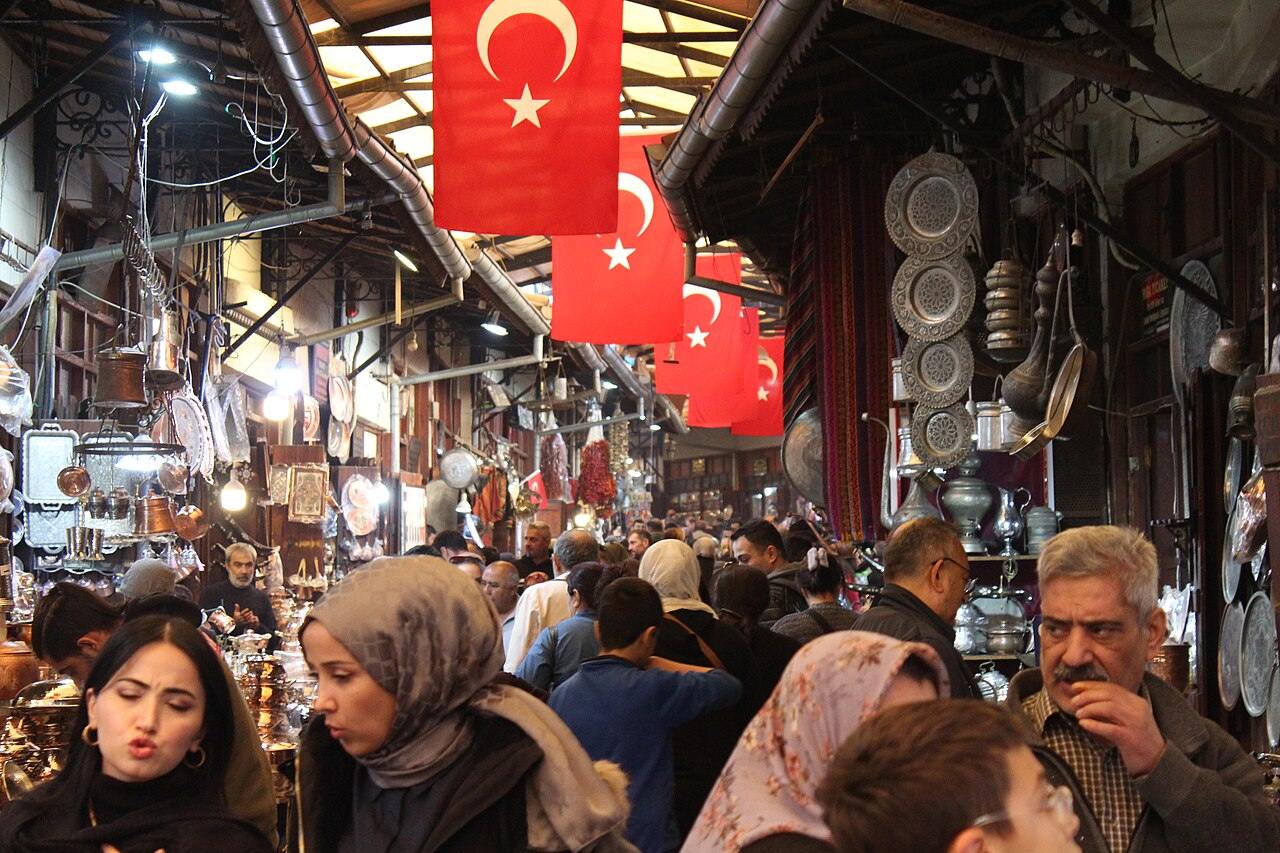

Some copper in Gaziantep is beaten from a single piece. One sheet, no solder, no seam in the body, hammered cold and hot until a flat disc becomes a pot deep enough to cook a whole lamb’s worth of stew. That’s the technique I read about, and the one I haven’t stopped thinking about since: a coppersmith there, so the account went, can raise a vessel this way in a working day, in a stall open to the street. Whether that’s true of the trade generally or just true of one good smith on one good day that someone wrote down, I can’t tell from here. That’s part of why I want to stand next to it.
I should say plainly, before I pretend to any authority: I have not been to Gaziantep. I have been reading about it for the better part of a month, which is a different thing from standing in the Bakırcılar Çarşısı, the coppersmiths’ market, while someone’s hammer keeps a rhythm you can hear three lanes over. What I have is research and want, in roughly equal measure. The want came first. The research is me trying to earn it.
Here is the thing that pulled me in, and it’s a small structural fact about the city rather than anything scenic. In most places I love, the food and the craft live in separate quarters. You go to one street for the thing people make and another for the thing people eat, and the tourist board draws a line connecting them. Gaziantep seems to refuse the line. The pistachio is a crop and an ingredient and the reason a whole confectionery trade exists. The copper is a tool and a trade and the reason the food can be cooked the old way at all. The fabric is a loom’s output and a wedding’s requirement. A city where making and eating are the same economy is rare, and I wanted to understand how that holds together before I go, so that when I do go I’m not just photographing it.
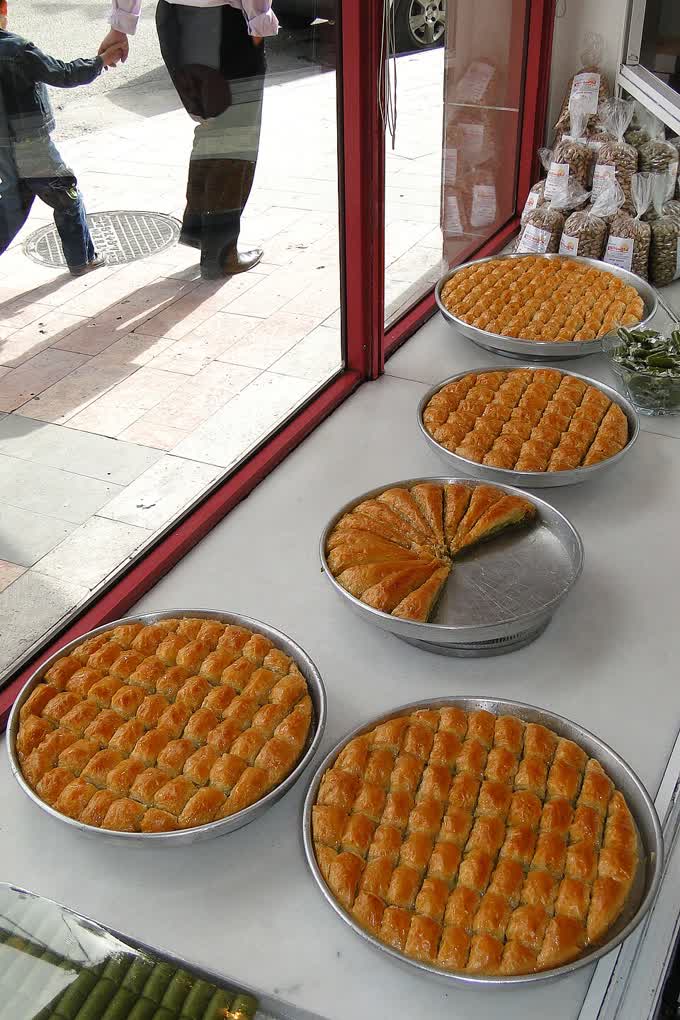
Start with the pistachio, because everyone does, and because Gaziantep has earned the right to be predictable about it. The local nut is the Antep fıstığı, the Antep pistachio, smaller and greener and more resinous than the pale ones sold roasted and salted elsewhere. It grows in the orchards on the dry land around the city, and it is the green you see cut through a tray of baklava, layer after layer of it, so densely packed in the best versions that the pastry reads as green with a little gold rather than gold with a little green.
_-_Turkey_(5768990270)_(2).jpg)
Gaziantep’s claim to baklava is not a marketing line. The city was named a UNESCO Creative City of Gastronomy in 2015, the first in Turkey, and the citation leans hard on exactly this: a regional cuisine built around a single local crop, with a guild-deep tradition of making one sweet extraordinarily well. I am wary of a place that a UNESCO panel has already blessed, because the blessing usually arrives with a queue. Gaziantep seems to have kept the making anyway. That’s the part I want to verify with my own eyes.
The copper is what I actually can’t let go of. The Bakırcılar Çarşısı is a working market, not a display of one. The coppersmiths, bakırcı, still hammer in the open, and the vessels they make are functional objects sold to people who will cook in them: the deep sini for serving, the tinned pots that need re-tinning every so often, the long-handled things whose names I don’t yet know and won’t guess at. Copper here is not souvenir weight. It’s the metal a serious kitchen in this region has always used, because it moves heat evenly and fast, and a city that cooks the way Gaziantep cooks needs it in quantity.
.jpg)
Some four hundred years of that demand built a market, and the market outlived the reason most such markets die, which is that industrial cookware got cheaper and good enough. Apparently here it didn’t get good enough. I love a craft that survives because the alternative is worse, not because a heritage grant is propping it up. I need to see whether that’s the real story or the one I’ve talked myself into from a thousand miles away.
Then the fabric, which is the part I know least and am most reluctant to embroider. Kutnu is a striped cloth woven in the region, silk and cotton together, the silk giving it a sheen and the cotton giving it a body, worked on looms since the Ottoman period. It was the stuff of ceremony, the good clothes, the fabric a family kept. Weaving it by hand is slow and the trade has thinned the way hand-weaving everywhere has thinned, and I honestly can’t tell you from here how much of it is still made on real looms in Gaziantep versus reproduced elsewhere for the tourist rail. That gap in what I know is the one that nags. It would be easy to write a confident paragraph about weavers I have never met, and it would be a lie, so instead I’ll say: the kutnu is the thread of this piece I most want to pull, and the one I’m least sure will hold when I get there.
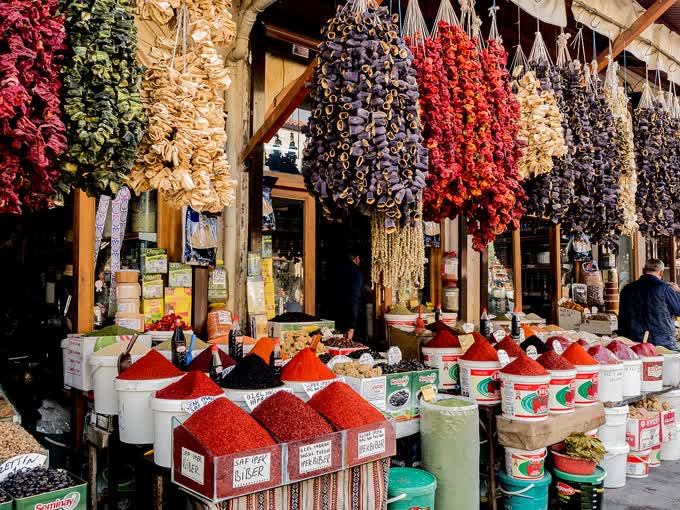
What I keep circling back to is that Gaziantep is a crossroads city that never stopped being a workshop. It sits in southeastern Anatolia, close to the Syrian border, on trade routes old enough that the making here predates any of the borders around it. Cities in that position often calcify into museums of themselves, their crafts embalmed for visitors who want to watch the past being performed. The register I keep reading, in the tourism copy and in the more careful travel writing both, is that Gaziantep didn’t do that. The copper is for cooking. The pistachio is for eating. The bazaar is for buying things you’ll use. Whether that’s true, or whether it’s the flattering story a city tells about itself, is exactly the question I can’t answer from a desk.
And there’s the cost of writing this now instead of after. I can name the Antep fıstığı and the Bakırcılar Çarşısı and I can repeat what I read about a pot raised in a day, but I can’t tell you whether that’s the everyday reality or a single practiced exception, and I can’t tell you what the market smells like at ten in the morning, whether it’s hot metal or roasting nuts or diesel or all three, or whether the hammering is a wall of sound or one lonely smith and everyone else on power tools now. Those are the things that would tell me if the place is what I think it is, and they are precisely the things reading can’t give me. I’ve built a version of Gaziantep in my head out of facts and photographs, and I already suspect the real one will correct me on something I currently feel sure about. That’s usually how it goes. It’s also the reason to go.
I’d fly into the city’s own airport rather than route through anywhere grander, and I’d give it more days than a food-tour itinerary allows, because the copper is a morning thing and the eating is an all-day thing and the fabric would take asking around. When I do, the first stop won’t be the famous baklava house. It’ll be the coppersmiths’ lane, to stand near a hammer and find out whether a single sheet of metal really becomes a pot while I watch, and how long it actually takes, or whether the working-day version was always a slightly-too-good story that reads better than it works.
Sources
- Photo: Qrdaaa, CC-BY-SA 4.0 · Wikimedia Commons
- Photo: Adam Jones, CC-BY-SA 2.0 · Wikimedia Commons
- Photo: Esin Ustun, CC-BY 2.0 · Wikimedia Commons
- UNESCO Creative Cities Network — Gaziantep
- Daily Sabah — Gaziantep: land of mosaics, copper and great food
- The National — Postcard from Gaziantep: kutnu fabric revival
- Daily Sabah — Ottoman royal fabric reborn in Dior's collection
- Wikipedia — Gaziantep Province
- Wikipedia — Sini (Turkish dining)