Kuşköy, Turkey: the village that talks across the valley

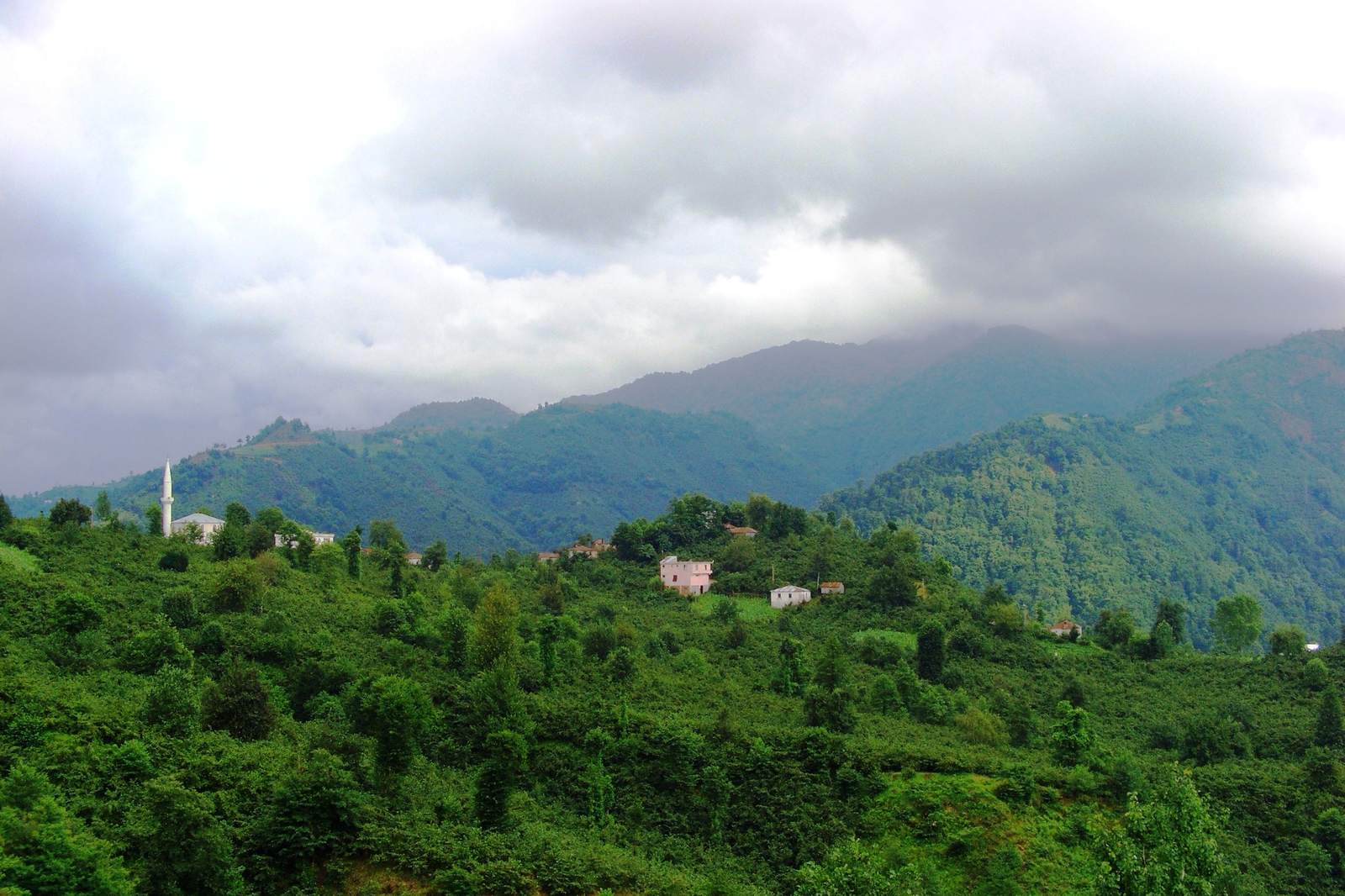

Kuşköy still speaks Turkish in a whistle, and that is more interesting than the UNESCO file that now follows the village around.
I have not been there. I have not stood on a terrace in Çanakçı, a mountain district in Giresun Province, and waited for a sentence to arrive from the other side of the valley. I have been reading. I keep a pin at about 40.88 north, 39.05 east, which is a coward’s kind of arrival, and a pin for a hillside, not a doorstep. The wanting is small and specific: I want to stand in Kuşköy and hear a conversation happen over my head.
The name is usually glossed as bird village. Kuş is bird, köy is village. The whistled register is kuş dili, bird language. Stay with the descriptions instead of the romance and the mechanism is almost blunt. Ordinary Turkish, pitched into whistle, syllable by syllable, so a neighbour can be spoken to without the walk. The walk is the origin story. The slopes grow çay, tea, and fındık, hazelnut. They are steep enough that dropping by is a project. Speech found a shortcut.
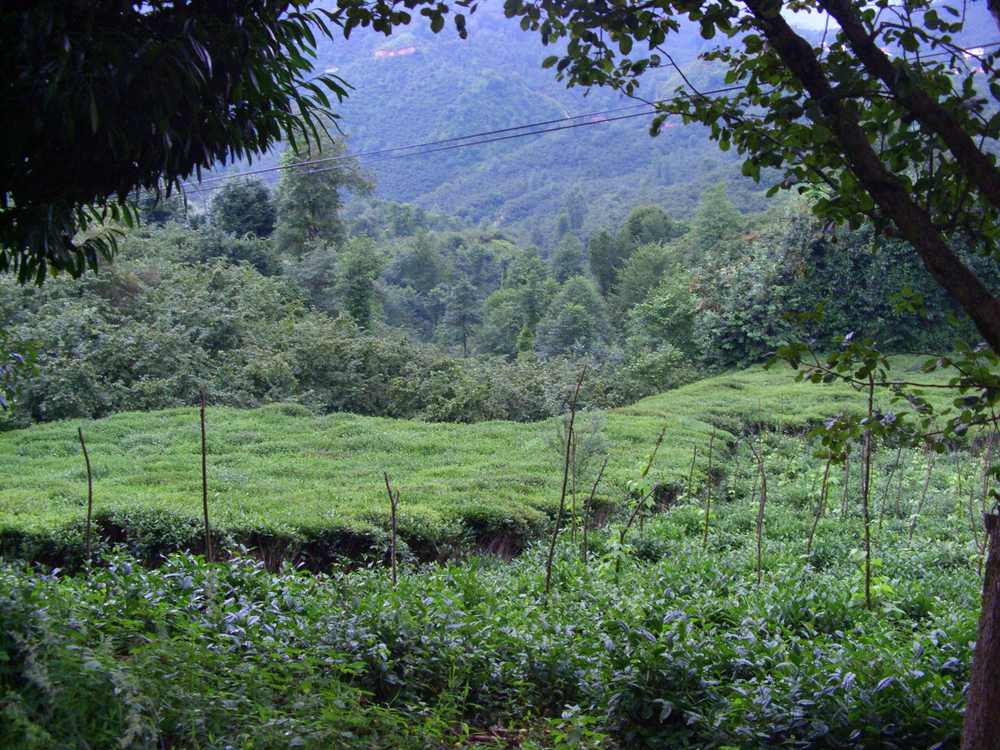

A few hundred people live there. TÜİK put the village around 390 in 2022. A number that small is part of why I keep staring. A working extra register of Turkish, kept by a village you could miss on a provincial map. The steepness I trust, because otherwise the whistle has no job.
two bodies of Turkish
I think kuş dili is Turkish wearing another body, and the English word “language” in the usual phrasing does some unhelpful work. What’s being encoded is the spoken language people already have. No separate bird lexicon sits in the valley. Turkish, recoded so it will travel. That is a more stubborn fact than a secret tongue. It means a child already learning to speak can, in principle, learn to throw the same syllables farther. It also means the whistle lives or dies with whether anyone still needs to throw them.
I have not heard it. That sentence has a cost I keep trying to write around, and I shouldn’t. I can’t tell you the pitch, the speed, whether a name still sounds like a name when it leaves the mouth and becomes air. I have watched clips, which is a poor cousin of standing underneath the thing while it happens. A loudspeaker in my headphones is not a valley. The air in this room does not carry. Documented exchanges run from hundreds of metres to a few kilometres, depending on the fold of the land and the weather. I have not stood in the valley with a tape, and I don’t trust a round number that travels so well in summaries.
What I can hold onto is the use. A whistle that can carry a whole sentence can carry a name, a request, a warning, a time to come down. It can tell someone on the far slope to wait, or to bring something, or that you are on your way, even if “on your way” still means an hour of bad footing. I don’t have a transcript of an actual exchange. I have the logic of a tool. If you can say it in Turkish, you can, in this register, try to throw it.
The Karadeniz, the Black Sea, makes this kind of country: wet, green, folded, a coast that turns into tea and hazelnut the moment you leave the water. Giresun is the province. The city of the same name sits on the sea. Kuşköy is inland and up, which is the whole logistical joke of wanting to go. You don’t stumble into a conversation of this kind on the way to somewhere else. You decide to be in Çanakçı. Then you are in the district where walking to your neighbour is the long way.
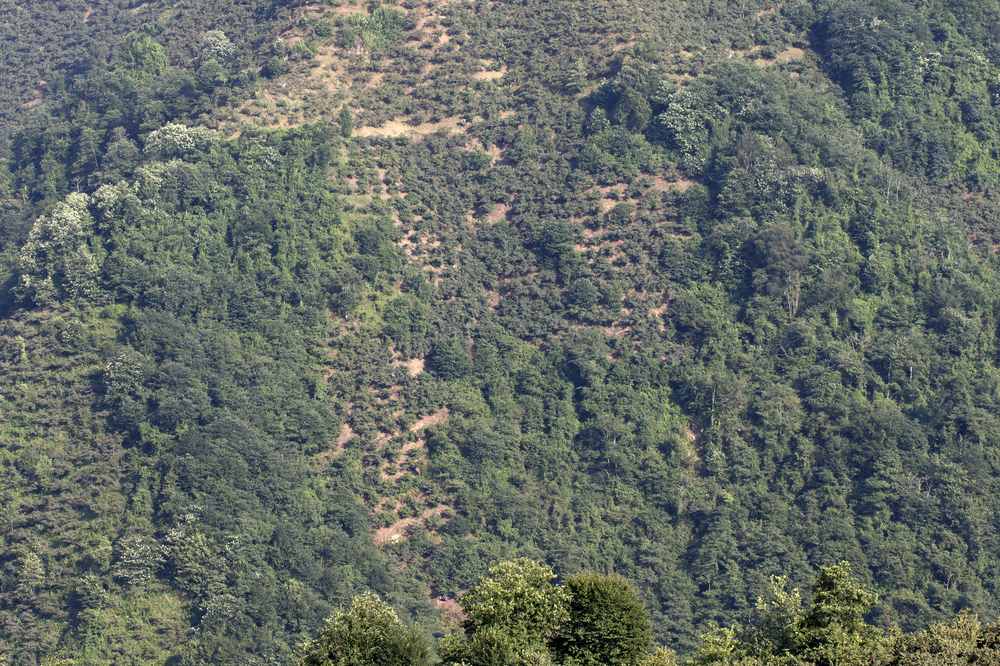

I keep looking at that geometry on a map and trying to feel the absurdity from a flat room. You can’t. A screen will give you the switchbacks and the green. It will not give you the reason a person would rather put a sentence into the air than put their body onto the path. That reason is in the legs. I don’t have the legs for this place yet. I have the pin.
what a listing does
UNESCO inscribed it in 2017 as “Whistled language” (Türkiye), on the List of Intangible Cultural Heritage in Need of Urgent Safeguarding. The official title is not “of Kuşköy.” Kuşköy and Çanakçı are the core practising area; the file also covers other Eastern Black Sea communities. I’m glad the file exists. I’m suspicious of what files do.
My opinion, and I will pay for it: a heritage listing is a mixed gift to a working practice, and kuş dili is a working practice first. The evidence is the shape of the thing itself. People did not whistle in order to conserve an identity. They whistled because the slope made a spoken conversation across the valley cheaper than a visit. The moment the same whistle is something you can put on a plaque, it acquires an audience. Audiences are not neighbours. They change the job.
UNESCO records a Bird Language Festival in Kuşköy since 1997. A festival is the public face a listing likes. I don’t begrudge a village a festival. I begrudge the way a visitor’s hunger (mine) leans toward the scheduled version of a sound that was invented for Tuesdays. If I ever go, the test I would use is rude and simple. Is anyone whistling when there is no schedule?
Phones cross valleys too. Roads get paved. Children leave. I’m not going to invent a decline curve I have not read in a study. The notes I keep for this place are already tagged disappearing, which is a mood as much as a fact. Moods are allowed in a longing essay. They are not evidence. What I can stand on is narrower. A tool exists because a problem exists. If the problem thins out, the tool has to decide whether it is still a tool or only a memory with a festival attached.
I keep catching myself writing the UNESCO inscription as a villain, and then I have to stop. The listing is how a person like me, at a desk, found the village with enough precision to put a pin in it. That is the loop. Attention can keep a practice in the mouth of a child. Attention can also turn the child into a demonstration. I don’t get to pick which one my wanting is. I only get to notice that the wanting has a weight, and that the village did not ask me to put it on a list.
Other slopes in the world have taught speech to leave the mouth. I know that, and I am trying not to stack them into a tour. Kuşköy is the one I cannot stop looking at, because the register is Turkish and the crop lines are tea and hazelnut and the district has a name I can spell. Specificity is the only visa I have from here. A more famous whistled slope would be a different pin, and I would still not have stood on it.
over my head
The image I cannot shake is almost embarrassingly small. Two people, out of sight of each other. Tea on one slope, hazelnut on the other, or both on both; I don’t know the cadastral joke of who grows what. A sentence goes up, thin, and comes down as meaning. I want to be in the gap, not in the conversation. I would like to be talked over. I would like the talk not to be for me.
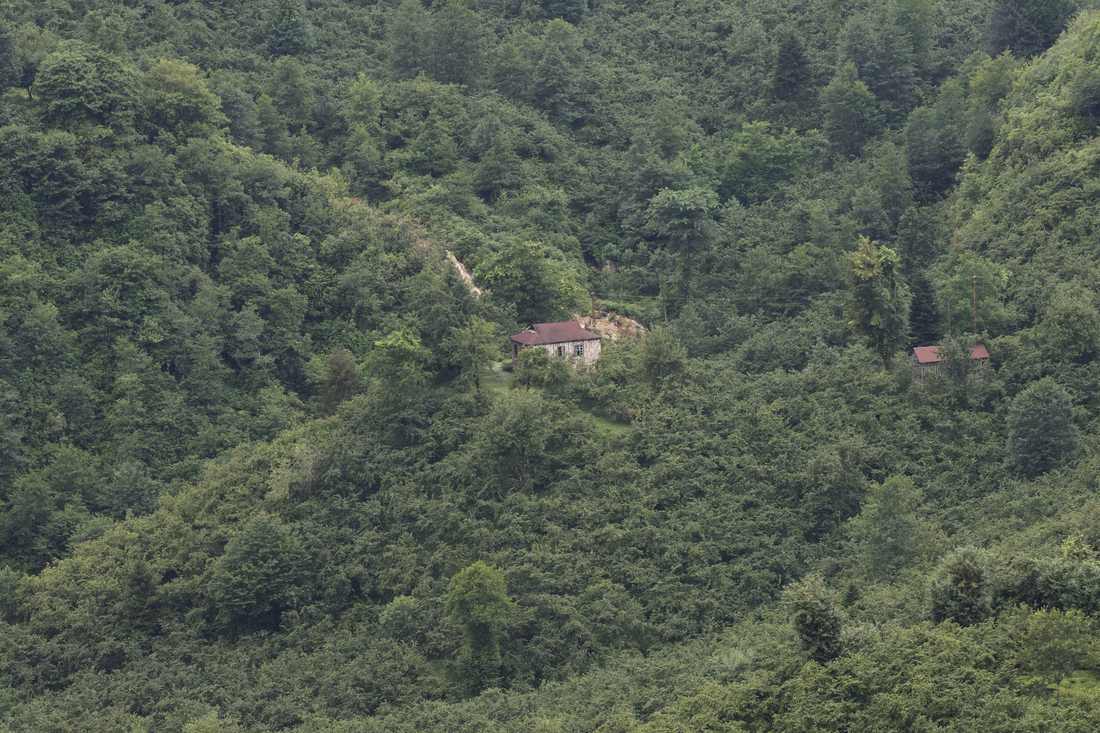

That last part is the part I’m least sure I can have. You don’t travel to a village known for a whistle and then become invisible. I would be the person who arrived because of kuş dili. The honest version of the trip, if I take it, includes that awkwardness. I can live with awkwardness. I can’t live with pretending, from here, that I already know what the air does.
I have been treating the map as if it were a rehearsal. It isn’t. A pin is a pin. The coordinates are real enough for a dispersed hillside, and they are still only a pin. The village is real. My body has done none of the work the slope would require, and so I am missing the only data that would make this more than an argument: the sound, in place, with a valley under it. I can tell you what I have read. I cannot tell you what it is like to hear Turkish arrive from a terrace you would not walk to before dark.
I have rewritten the wanting until it got smaller. It used to be a whole visit I had no right to describe. It is now one hour. A path I have not taken, a slope I have not stood on, a conversation that does not include me. That is the version I trust. The rest was scenery I had borrowed from photographs and had no business wearing.
If I go, I want that hour to be ordinary. A Tuesday, if Tuesdays still have this in them. The question I would carry up from the coast is simple enough to be a little cruel. Is anyone talking over the valley, or did I come for a file?
The facts. Kuşköy is a village in Çanakçı district, Giresun Province, on the Black Sea mountain side of northeastern Turkey. The district centre is Çanakçı; the provincial city, Giresun, sits on the coast below the folds where the çay and fındık grow. The practical fly-in is Ordu-Giresun (OGU) or Trabzon (TZX), then a road inland to Çanakçı. Trabzon is the closer airfield to the village; OGU is the airport that serves Giresun city. I have not run the transfer, and I will not invent a drive time. UNESCO records a Bird Language Festival in Kuşköy since 1997. I still cannot give you a festival week I trust. Think in terms of the working year on those slopes, and of mountain roads that are kinder in the warmer months, rather than a date circled for visitors. The access rule that matters is simple. This is a living village, and kuş dili is how neighbours talk when the walk is absurd. You are a guest in a workplace. You are not owed a demonstration.
Sources
- Photo: Dr. Zeynel Cebeci, CC BY-SA 3.0 · hero.jpg
- Photo: Dr. Zeynel Cebeci, CC BY-SA 3.0 · giresun-tea.jpg
- Photo: Zeynel Cebeci, CC BY-SA 4.0 · giresun-hazelnut.jpg
- Photo: Zeynel Cebeci, CC BY-SA 4.0 · giresun-house.jpg
- https://ich.unesco.org/en/USL/whistled-language-00658
- https://www.kamu3.com/kuslar-gibi-konustular-festivale-davet-ettiler/1096617
- https://www.cell.com/current-biology/fulltext/S0960-9822(15)00794-0
- https://tr.wikipedia.org/wiki/%C3%87anak%C3%A7%C4%B1
- https://www.nufusu.com/ilce/canakci_giresun-nufusu
- https://tr.wikipedia.org/wiki/Ku%C5%9Fk%C3%B6y,_%C3%87anak%C3%A7%C4%B1
- https://www.geonames.org/742020/kuskoey.html
- https://en.wikipedia.org/wiki/Ku%C5%9Fk%C3%B6y
- https://ich.unesco.org/en/photo-pop-up-00973?photoID=11075
- https://www.ichlinks.com/archive/elements/elementsV.do?elementsUid=13829896120124900151
- https://www.newyorker.com/tech/annals-of-technology/the-whistled-language-of-northern-turkey
- https://www.milliyet.com.tr/ekonomi/findigin-baskenti-giresunda-cay-hasadi-basladi-6767194
- https://biruni.tuik.gov.tr/medas/?kn=95&locale=en
- https://www.nufusune.com/14528-giresun-canakci-kuskoy-koy-nufusu
- https://www.science.org/content/article/whistled-turkish-tickles-both-sides-brain
- https://tr.wikipedia.org/wiki/Giresun_(il)
- https://ich.unesco.org/en/decisions/12.COM/11.A.5
- https://www.bbc.co.uk/news/blogs-news-from-elsewhere-42256155
- https://www.hurriyetdailynews.com/un-moves-to-protect-whistled-bird-language-in-turkeys-black-sea-region-123671
- https://ich.unesco.org/en/11a-urgent-safeguarding-list-00938?include=slideshow_inc.php&id=00658
- https://www.dhmi.gov.tr/Sayfalar/Havalimani/Ordugiresun/Ulasim.aspx
- https://en.wikipedia.org/wiki/Trabzon_Airport
- https://kmhesaplama.com/giresun-canakci-trabzon-arasi-kac-km/