Bukhara: the crossroads that stayed

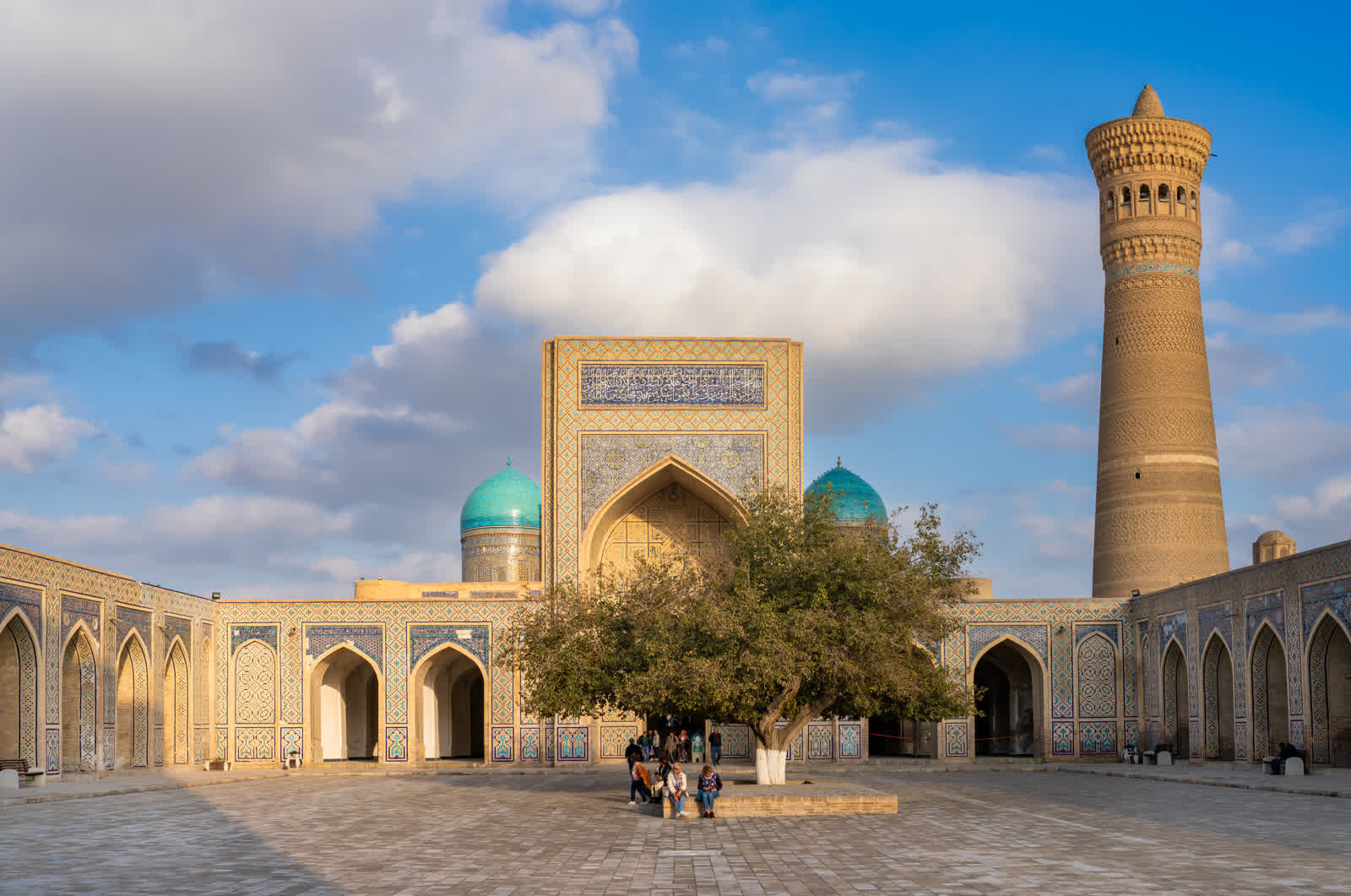

A trade route is not a place, and most of the cities that lived off the Silk Road proved it by dying when the caravans stopped coming. Bukhara did not. That is the thing I keep circling back to, the reason it sits at the top of a list I have not yet earned the right to talk about firsthand.
I should say plainly that I have never been to Bukhara. Everything here is assembled from photographs, maps, the accounts of people who went, and the particular ache of wanting to. So read this as a letter written toward a city, not from inside one. I think the wanting is worth putting down anyway, because what draws me is specific enough to name, and naming it is most of the work.
What draws me is that the old city is small enough to cross on foot, a kilometer or so by the felt of it, though the maps make it a little larger than that. No cars in the historic center, or close enough to none that the accounts stop mentioning them. That compression does something I find hard to get anywhere I actually live. A city you can hold in your legs, where the distance between the fortress and the Kalyan minaret is a walk you could take before lunch, collapses the usual gap between a monument and the life happening next to it. You are never touring. You are just there, and the eleventh century is also just there, and the two share a lane.
The domes where the trade never fully left
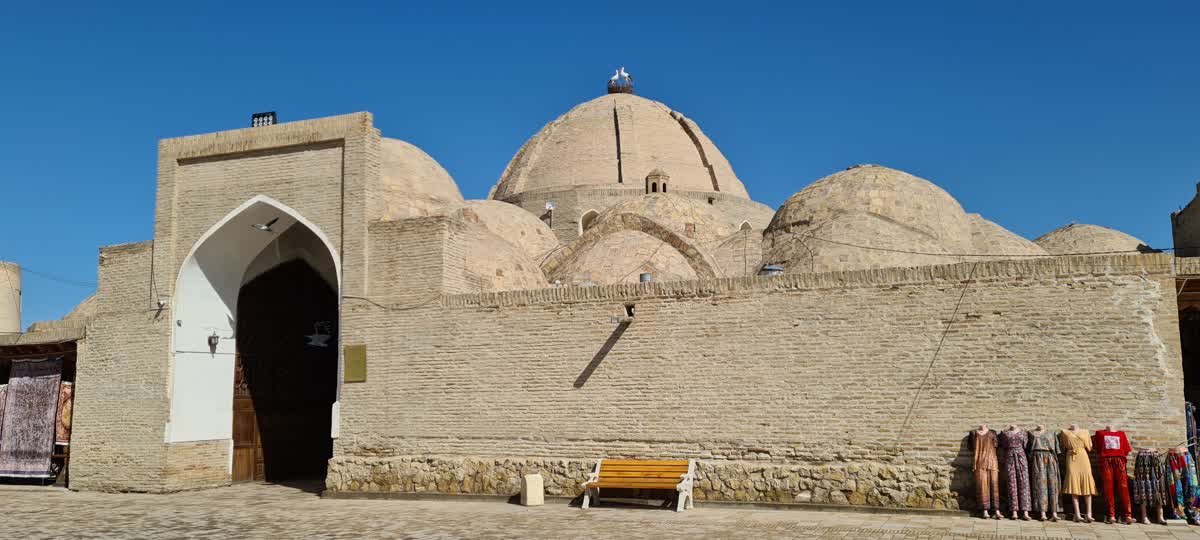
Here is the detail that made me stop scrolling and start reading properly. The covered bazaars are still bazaars. Bukhara built a set of domed crossroads markets, each one a toqi, a brick cupola thrown over the intersection of two trading streets so business could happen in the shade. The names survive by trade. Toki Sarrafon was the dome of the money-changers. Toki Telpak Furushon was the dome of the cap-sellers. Tim Abdullakhan was a larger enclosed hall for silk. What gets me is not that they stand. Plenty of old buildings stand. It is that people still sell things inside them, that the function outlived the empire that built it, and a toqi raised for one kind of merchant now shades another selling scarves and knives and hammered copper.

I have read that the workshops never moved out to an industrial edge the way crafts usually do. They stayed in the alleys. Ceramics, metalwork, the fine brushwork of miniature painting, silk woven the slow way. If that is even half true it is the whole draw. I have spent enough time around people who make things to know the difference between a demonstration and a workshop that happens to let you watch. One is theater. The other is a man ignoring you because the work will not wait, and I would cross a continent for the second kind.
A pool, and the life around it
The center of daily Bukhara, from everything I can gather, is water. Lyab-i-Hauz is a stone reservoir, a hauz, dug in the early seventeenth century and ringed by mulberry trees old enough to lean. The city once had many of these pools and filled them from the canals; most were drained in the Soviet period for the diseases they bred, and this one was kept. Now it is where people sit. Tea, shade, the flat green water, old men at chessboards in the photographs. I find I trust a city more when its most photographed spot is also where locals go to do nothing in particular. It means the postcard and the ordinary afternoon are the same place, which is rare and which I would like to test against my own eyes.
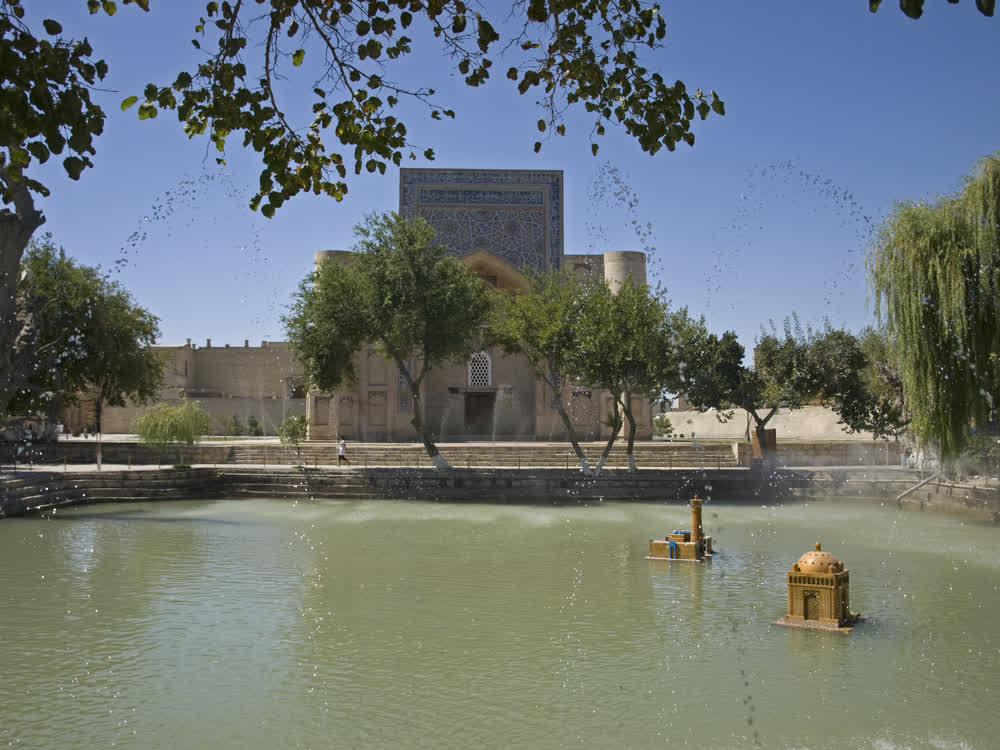

Around that water the madrasas do a thing I have not seen described elsewhere with quite this frankness. Several of them are no longer museums. A madrasa was a residential college, cells around a courtyard, and in Bukhara a number of them have been given back to craftsmen, so the cells that once held students now hold a weaver, a puppet-maker, a woman selling suzani, the large embroidered textiles stitched in silk on cotton, needle-worked so densely the ground cloth almost disappears. There is something right about that reuse. A building made for the patient transfer of a skill from one person to the next, still doing exactly that, minus the theology. I would rather see a live loom in a study cell than a rope keeping me off a preserved one.
The bazaar that tells the truth about itself
The part I find almost too honest to believe, and want to test before I trust it: the market seems to be split, and most people seem to know which half is which. One side is turned toward the tourists, the magnets and the small ceramic bells and the scarves priced in a currency of visitors. The rest of it is where Bukhara actually shops, for the unglamorous things a household needs, at prices nobody rounded up for a foreigner. I love that this is apparently just understood rather than hidden. If it works the way I imagine, it admits the bargain a heritage city makes to survive, that some of its old bones now pay rent by performing themselves, and it quarantines that performance to one aisle so the real economy can keep breathing next door. I want to walk the second half. I want to buy something dull and necessary and be treated like weather.
The density I keep trying to picture
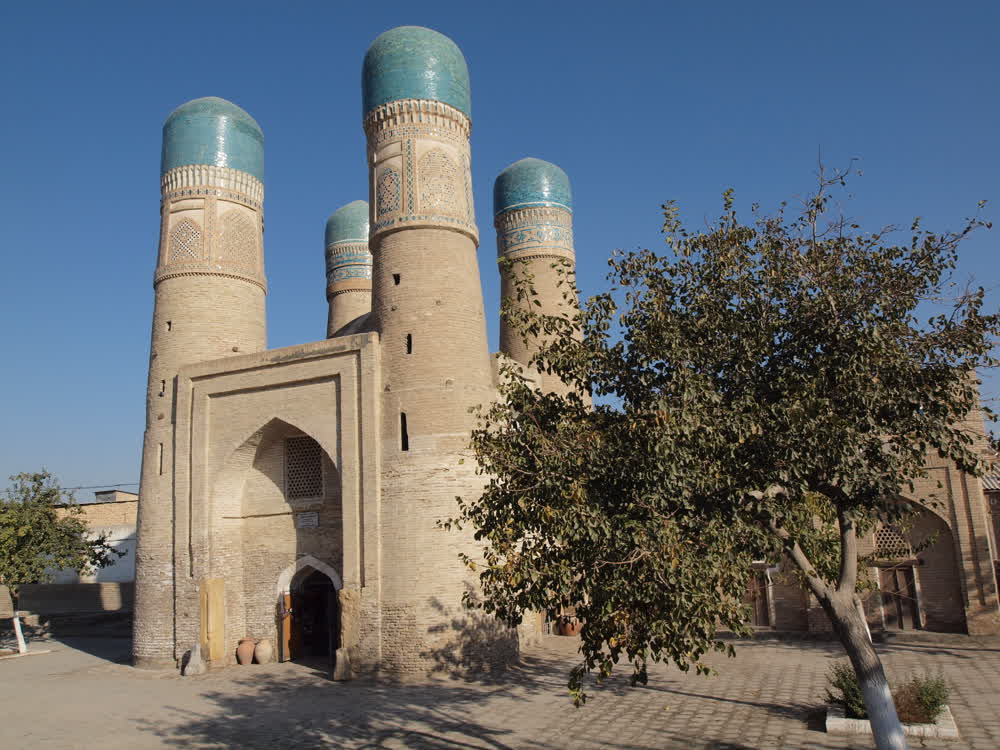
I cannot yet picture the skyline honestly, so let me at least list what casts the shadows. The Kalyan Minaret, a brick tower banded in patterned courses, the one Genghis Khan is said to have spared when he leveled much else, though I hold that story loosely because a good tower attracts good legends. The Ark, the royal fortress, a mud-brick mound that was a small walled city of its own. Chor-Minor, which means four minarets, a squat gatehouse capped with four blue-domed towers that look, in every photograph, slightly too whimsical to be as old as they are. And the one I most want to stand in front of: the Samanid Mausoleum, a cube of baked brick laid in patterns that shift with the sun, built in the ninth or tenth century and, by the accounts I trust, the oldest surviving monument of Islamic architecture in Central Asia. It survived, I have read, partly by being buried in silt and forgotten, which is its own kind of luck. A thing outlasts its makers by dropping out of sight for a few hundred years.
.jpg)
What I keep failing to imagine is the proximity. The major monuments inside a kilometer or so, give or take, with only Chor-Minor and the mausoleum sitting a little outside the tightest cluster. In the cities I know, monuments are spaced out like teeth, and you spend the day in transit between them. Bukhara, if the maps are honest, stacks them close enough that you turn a corner from the minaret and there is the fortress, and the mausoleum is a short walk past the edge of the old wall, and the whole thing is legible in an afternoon and inexhaustible over a week. That contradiction is exactly the trap I want to fall into.
I think what a crossroads becomes, if it refuses to disappear, is a city with its own gravity. The routes gave Bukhara a reason to exist, and then the routes moved, the way they always do, to ships and then to planes and then to fiber. A crossroads that was only a crossroads would have emptied out. This one had kept enough of itself, the workshops and the water and the domes and the plain daily business of selling flour to neighbors, that when the reason left, the place stayed. I have not stood in it. But I have stood in enough hollowed-out heritage towns, the ones that are all performance and no flour, to know how unusual it would be to find a whole one still running. I would like to go and be wrong about it, or be right.
Sources
- Photo: Maksimsokolov, CC BY-SA 4.0 · Wikimedia Commons
- Photo: BeshevI, CC BY-SA 4.0 · Wikimedia Commons
- Photo: Chris Shervey, CC BY 2.0 · Wikimedia Commons
- Photo: Ymblanter, CC BY-SA 4.0 · Wikimedia Commons
- UNESCO Silk Road: Historic Centre of Bukhara
- UNESCO World Heritage: Bukhara
- Britannica: Bukhara
- UNESCO Creative Cities: Bukhara
- Wikipedia: Toqi Sarrofon
- Wikipedia: Toqi Telpak Furushon
- Wikipedia: Tim Abdullah Khan
- Wikipedia: Lyab-i Hauz
- Wikipedia: Kalyan Minaret
- Wikipedia: Chor Minor
- Wikipedia: Ark of Bukhara
- Wikipedia: Samanid Mausoleum
- Smarthistory: Samanid Mausoleum
- ArchNet: Taq-i Zargaron
- V&A Museum: Suzani