Essaouira: the wind decides when you leave

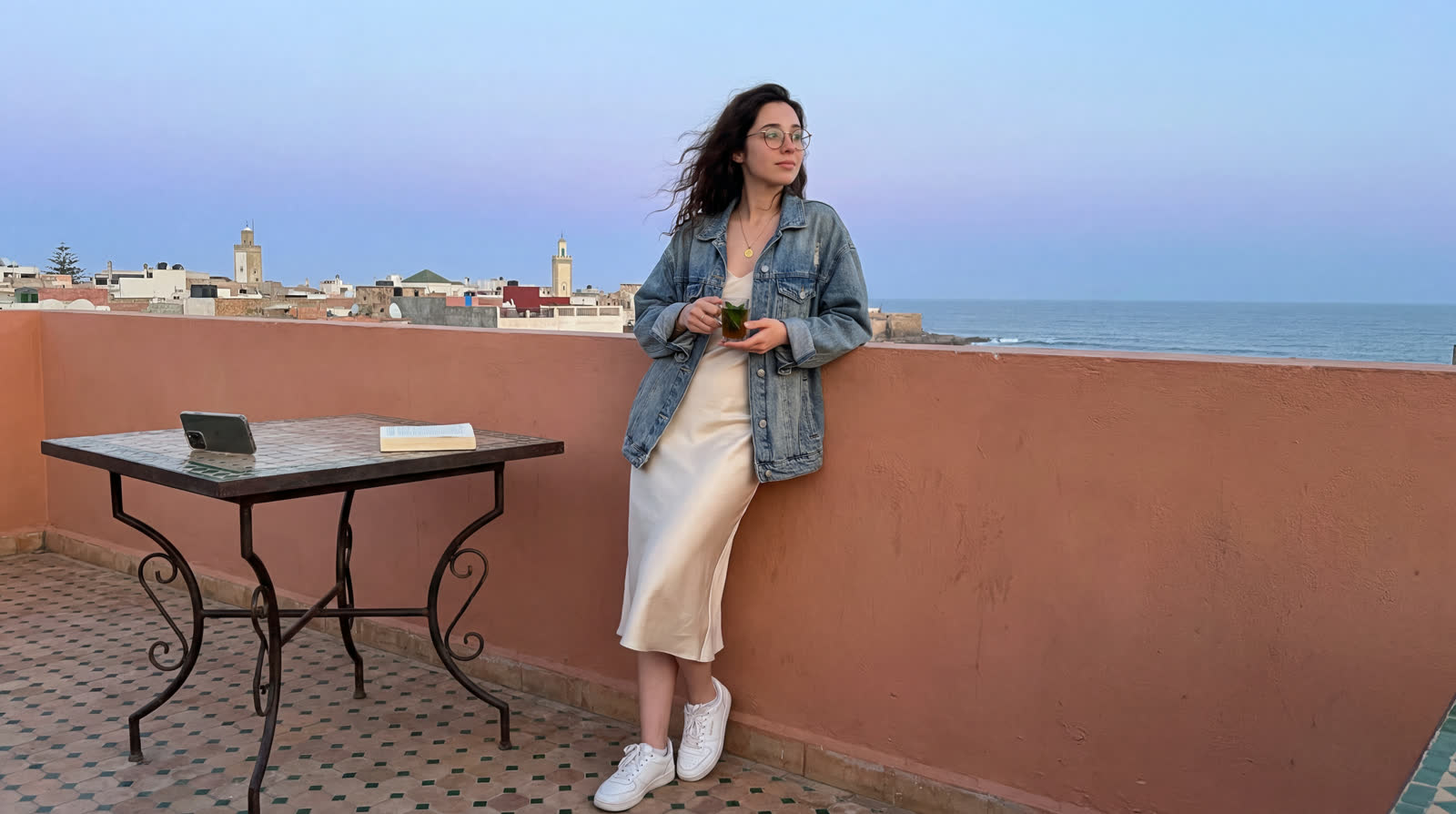
Fatima knocked at seven with mint tea and the news that the plane wasn’t going. The alizé, she said, the north to north-easterly trade wind that blows here most afternoons in July and had decided to make a day of it. She said it the way you’d say the bread was ready. The airline had pushed the afternoon departure. Tomorrow, probably. Maybe the day after.
I had booked three days in Essaouira. I got five, and the two I didn’t ask for are the ones I’m still thinking about.
I should say that I wrote about this town once before I ever stood in it, from photographs and reading and the particular greed you build for a place at a distance. I’m not going to relitigate that. What the reading didn’t tell me is the thing I want to put down here: that I performed my goodbye to this city twice, packed my bag and everything, and both times it handed itself back, lighter each time.
Three days, and the shape of leaving
The first three went the way first days go. I got lost within fifteen minutes of walking out of the riad, which I think is the correct amount of time to get lost in a medina, and then lost again after dinner in a darker, quieter version of the same streets until a boy of maybe twelve appeared out of a doorway, asked in French if I needed help, walked me to the right corner, and refused the coins I offered him.
The riad is down an alley off Rue Ibn Rochd, past a spice shop and a man selling leather bags out of a doorway. The door is old cedar, heavy enough that you lean rather than push. Inside, a courtyard tiled in green and white zellij, the cut geometric tilework, with a fountain that wasn’t running. Fatima checked me in with mint tea and almond cookies and showed me a small whitewashed room with a carved plaster ceiling and roughly nine pillows on the bed.
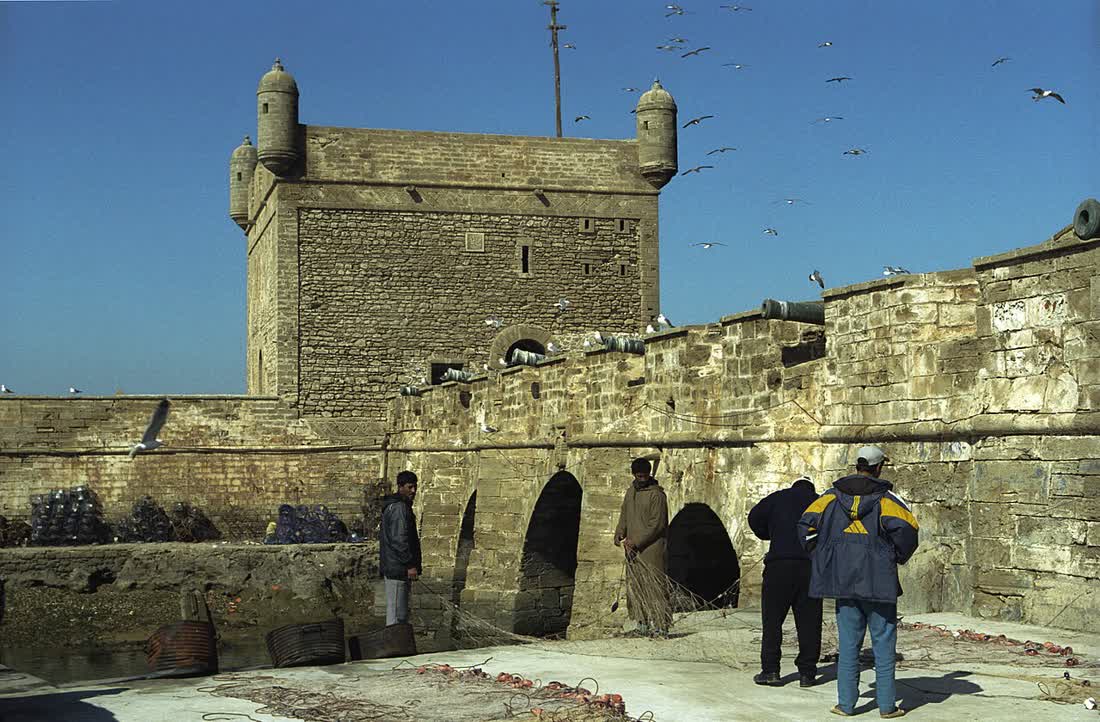
By the third morning the walk from the riad to the fishing port had collapsed to three turns. Past the shuttered spice shop, right at the corner where the blue paint is chipping off the wall in a shape I decided looks like a bird, past the open front of a woodworkers’ workshop under the ramparts, down the slope to the water. The wood is thuya, the local conifer whose root burl the men here have been carving for generations, and you smell it before you see it: warm, resinous, closer to honey than to cedar. My feet knew the route. I remember standing at the port that morning thinking, with real self-pity, that tomorrow I’d lose it.
.jpg)
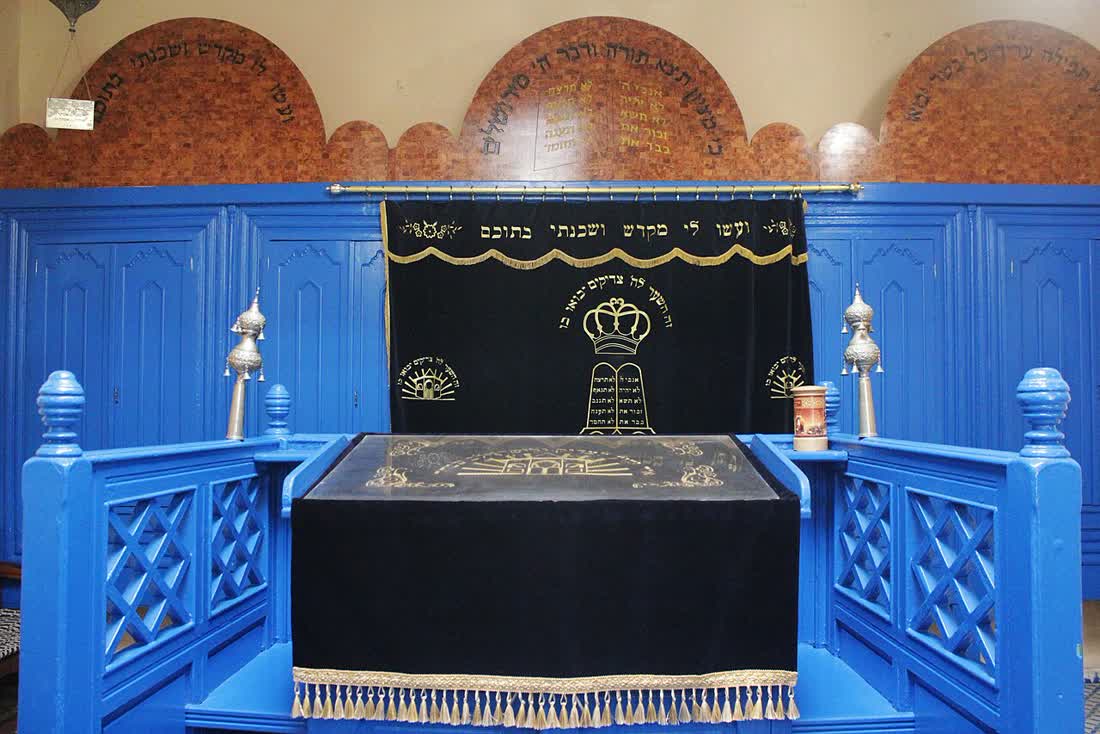
That third day I did the two things I’d been carrying since before I arrived. I found the Haim Pinto synagogue in the mellah, the old Jewish quarter, up a staircase I’d walked past the day before without noticing, behind a small sign. The blue in that room stopped me. Not the blue of the medina doors, which the salt has been working on for decades until it goes soft. A maintained blue, renewed, deliberate, painted onto the woodwork, with lamps hanging from the ceiling and benches down the side walls. Morning light came through the window and the woodwork went underwater. The mellah was a substantial part of this city once, merchants and artisans and families who spoke four or five languages between them, and this is one of the few rooms still in use, kept going by the people who come back to it. I sat there thinking about what it means to be the room people return to.

Then I went looking for the zaouia, the Gnaoua sanctuary, somewhere in the residential streets under the sea ramparts. I didn’t ask directions, because the thing that drew me to it is that it isn’t a stage. It’s where the practice lives when nobody is watching, and turning up with a question felt like the wrong first move. So I walked and listened, and found a carved doorway on a street with no shops, a threshold worn smooth, something stringed and low coming from deep inside. I stood there for a minute. Then I walked on.
That was my choice and I still think it was the right one, but it cost me. I traded the inside of the room for a sound through a wall, and I got a good sentence out of it and not much else. The trip corrected me on that later, which is the only reason I can be relaxed about it now.
I wrote a farewell on the roof that night. The stars, the wind dropping to its evening gentleness, the deliberate holding-on-for-one-more-minute. Full ceremony.
The day I already gave away
I sat on the edge of the bed with the tea in both hands and waited to feel frustrated. It didn’t arrive. What came instead was lighter than either frustration or relief: the day had been handed to me empty. No itinerary, no last-chance pressure, no goodbye to perform, because I’d already performed it. I could stop leaving and just be there.
The café was the same as always that morning. Small courtyard off the medina street, mismatched chairs, a man pulling espresso who has never said a word to me beyond the price. I ordered msemen, the layered flatbread you tear rather than cut, with honey. He set it down and almost smiled. Not quite. The corners of something moved. Four mornings in a row apparently earns you that here, not a greeting, just an acknowledgment that you keep turning up.
Then I crossed a threshold I’d been hovering at for three days. There’s a printmaker’s studio in the medina that I found by smell before I found it by sight, ink and linseed oil going sharp against the bread and the wood shavings. I’m not going to name it or say which street. It’s a working room and not an attraction, and the next person should find it the way I did. I’d been standing in the doorway since day two, watching Nadia pull prints and not going in. That morning the door was propped open with a stone and she looked up and said something in French about la fille qui regarde, the girl who watches, smiling, like she’d been waiting for me to get on with it.
We talked for an hour, maybe longer. My French is bad enough that half of it ran on gestures, her saying a word slowly, me repeating it wrong, both of us laughing. Two different crafts share that room and she moves between them without ceremony. On one side the press and the etched plates, the acid and the ink. On the other the block work: gravers lined up by size, a slab of boxwood clamped down, pale dust in the grain of the bench where she’d been cutting. Most of what she told me I couldn’t hold onto well enough to write down honestly, which is its own report on my French.
She let me pull a print. I cranked the wheel too fast, the registration slipped, and the botanical came off the press slightly doubled, ghosted against itself. She held it up, tilted her head, said c’est mieux. It’s better. She wasn’t being kind. She was looking at it the way you look at something you mean.
The thing she told me that I keep turning over is that the plate remembers every mark. You can’t undo. You can only go forward, add more, work with what’s already there. She meant it as a fact about intaglio and not as a metaphor, which is exactly why it works.
She signed the doubled print, the mistake, in pencil on the back and gave it to me.
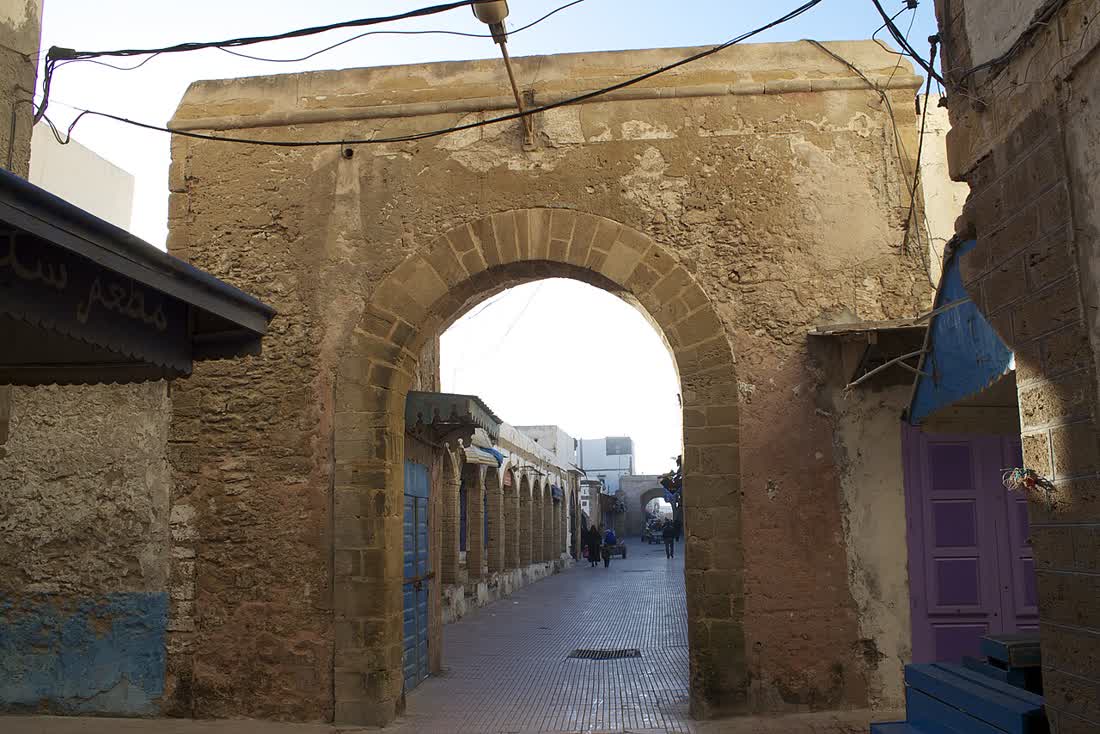
After that I drifted, and the medina goes different when you’re not trying to find anything in it. The pressure drops and the between-spaces start showing up. A cat asleep in a wall niche that was clearly cut for a lamp and has been a cat bed for longer than it was ever a lamp. Oum Kalthoum coming out of a window above me, enormous and sad, carrying across the years the way she does. Stars of David cut into the stone above doorways in the mellah, no two of them quite the same, each one shaped by somebody who cared about the angle. The houses there wear iron balconies that face out into the street, which the Moorish houses on the other side of the medina never do.
.jpg)
I found Dar Souiri by turning a corner. I hadn’t been looking, not that day. I’d had the cultural centre in my head since before the trip and had talked myself out of hunting it down. A small hand-painted sign, a courtyard visible through an open door, and music coming out of it. Live, not recorded. What normally happens in that courtyard is a ticketed evening concert, so an open door on an ordinary afternoon was luck and I want to be clear that it was luck.
The courtyard is small enough that the sound doesn’t travel to you, it moves through you. Three musicians on cushions by the far wall: the guembri, the three-stringed bass lute, and two men working qraqeb, the heavy iron castanets, in a pattern that is simple until you try to describe the space between the beats. Locals on the stone benches around the edge. One European couple leaning into each other, not moving. Nobody had a phone up. Not one, the whole time I was there, and I noticed because I kept waiting for the first one.
The guembri does something to time. When I came back to myself my legs had gone stiff, most of an afternoon was gone, and the qraqeb players had swapped without a seam in the rhythm. The player never once looked at the audience. He was playing for the room, or for what the room is for.
I’d stood outside a doorway a day earlier telling myself that some things are better found than entered. The wind disagreed with me, and the wind was right.
What the second extra day was for
The next morning I was packed by six-thirty, bag by the door, hours early for a flight that was never going to be until the afternoon. It went again. Fatima checked her phone in the courtyard and her face changed, and I sat with my tea going cold and no idea what to do with a day I had already given away twice. The alizé again, she said. The small blue barques weren’t going out either, she told me: they stay in when it blows like this, and the bigger boats go anyway. What’s left is a port full of men with nothing to do, which I had been reading as local temperament for four days.
So I went south. Past the port, past the sardine boats, down to the long open beach where the kite surfers launch, which I had only ever looked at from above. On foot the scale of it is different: sand blowing sideways, the beach just continuing until it goes to haze, two boys playing football at the tideline with their sandals for goalposts. One of them waved and shouted something the wind took away from me. I waved back. That was the whole exchange and it was enough.
I ate at a place with eight tables above the port that I’d walked past four times without going in. The menu is sardines or sardines. Mine came blackened at the edges in the way that means it went from grill to dish without stopping to be arranged, with preserved lemon cutting through all of it and warm bread. I have a lot of respect for a kitchen that knows precisely what it is.
Then I sat in Place Moulay Hassan for two hours with a coffee from a cart and did nothing. Watched a woman set up a henna table and lay out her syringes and stencils with the precision of a surgeon, then sit back and wait. Watched a man my age settle ten feet along the same wall, light a cigarette, and read an actual folded newspaper cover to cover without looking up once.
I got back to the riad around five and Fatima was watering the jasmine in the courtyard. She looked up and said, flatly, “you came back.” Not surprised. Noting it, the way you’d note a change in the weather. I told her the day had been a gift. She said the wind here gives and takes and it’s better not to keep score.
Amina cooked that night, Fatima’s mother, the owner, a small woman whose hands look like they’ve been shaping dough since before I was born. Chicken couscous with tfaya, the sweet caramelised onion and raisin topping that takes hours and tastes like somebody spent the afternoon thinking about you. We ate at the zellij-topped table in the courtyard. Fatima translated less than she had the night before, because by then we’d all got better at the other language, the one that runs on timing and knowing when to pass the bread.
Amina kept tearing pieces of bread and setting them on the edge of my plate. Not offering them. Placing them, with a quiet authority that left no room to decline. At one point she asked, through Fatima, whether I had a mother. I said yes and left it there, and she nodded and tore me another piece.
I’m writing this in the morning on the roof with the bag packed by the door for the third time. The flight is this afternoon, supposedly, and there are still a few hours in which the wind can have an opinion. The doubled print is rolled in a tube in the bag and I know the wall it’s going on. My hands still smell of the box I bought at the woodworkers’ cooperative, thuya again, the lid closing with that whisper of friction, and I expect the room they carved it in will stay in that box for years.
If the wind turns again, it turns.
About Essaouira
Essaouira, Marrakesh-Safi, Morocco. The medina is a UNESCO World Heritage Site (inscribed 2001), and the Gnaoua practice heard in this piece is on UNESCO's Representative List of the Intangible Cultural Heritage of Humanity. Official tourism information: Moroccan National Tourist Office.
The photograph of August in this piece is AI-generated. Every other image above is a real photograph of Essaouira, credited below.
Sources
- Photo: Jerzy Strzelecki, CC BY 3.0 · img/skala-du-port.jpg
- Photo: Nassima Chahboun, CC BY-SA 4.0 · img/haim-pinto-blue.jpg
- Photo: Patrick Nouhailler's…, CC BY-SA 3.0 · img/medina-archway.jpg
- https://www.climatestotravel.com/climate/morocco/essaouira
- https://weatherspark.com/y/31978/Average-Weather-in-Essaouira-Morocco
- https://www.visitmorocco.com/en/travel/essaouira-mogador
- https://www.windfinder.com/windstatistics/essaouira
- https://www.visitmorocco.com/en/events/printemps-musical-des-aliz%C3%A9s
- https://en.wikipedia.org/wiki/Essaouira-Mogador_Airport
- https://ourairports.com/airports/GMMI/runways.html
- https://www.universalweather.com/airports/GMMI-ESU-ESSAOUIRA-AIRPORT-ESSAOUIRA-MOROCCO/
- https://www.salutmaroc.com/
- https://palais-des-remparts.essaouirahotels.net/en/
- https://riadalmadina.com/en/home/
- https://en.wikipedia.org/wiki/Zellij
- https://www.palaisamani.com/en/the-art-of-mosaic-an-ancestral-tradition/
- https://www.visitmorocco.com/en/discover-morocco/traditional-craftsmanship-revisited
- https://www.wood-database.com/thuya/
- https://wwf.panda.org/es/?11421%2FB-Project-report-BBRMoroccos-argan-and-thuya-woodlands=
- https://www.conifers.org/cu/Tetraclinis.php
- https://www.visitmorocco.com/en/travel/essaouira-mogador/shopping
- https://www.finewoodworking.com/2008/02/25/the-marquetry-artists-of-essaouira
- https://www.slowmorocco.com/places/thuya-wood-workshops
- https://www.petitfute.co.uk/v46281-essaouira/c1085-maison-deco-jardin/c1066-artisanat-d-art/1518783-cooperative-artisanale-des-marqueteurs.html
- https://visitessaouira.com/place/cooperative-artisanale-des-marqueteurs-dessaouira/
- https://www.facebook.com/thuyaessaouira/?locale=fr_FR
- https://telquel.ma/2014/08/08/synagogue-haim-pinto-symbole-tolerance-judeo-musulmane_1411216
- http://archive.diarna.org/site/detail/public/2944/
- https://en.wikipedia.org/wiki/Chaim_Pinto
- https://shin-tours.com/shorashim-magazine/essaouiras-jewish-history-and-jewish-sites
- https://moroccotravelblog.com/2015/05/07/remembering-jewish-essaouira-heritage-sites-synagogues/
- https://whc.unesco.org/en/list/753/
- https://www.moroccoworldnews.com/2024/07/16937/behind-the-walls-a-walk-through-the-mellah-moroccos-jewish-quarters/
- https://leseco.ma/maroc/une-etude-de-rehabilitation-promise-pour-le-quartier-mellah-dessaouira.html
- https://momentmag.com/morocco-echoes-from-the-jewish-quarter/
- https://www.thejc.com/life/travel/magical-mogador-o38dighs
- https://forward.com/culture/392984/6-moroccan-cities-where-jewish-culture-flourishes/
- https://fulbrightmorocco.medium.com/uncovering-essaouiras-jewish-past-c2688227aa60
- https://www.riadessaouira.org/post/mellah-les-quartiers-juifs-de-marrakech-%C3%A0-essaouira
- https://ich.unesco.org/en/RL/gnawa-01170
- https://www.festival-gnaoua.net/en/tickets/
- http://sannyassa.co.uk/zaida-gania-and-zaouia-des-gnawa/
- https://demodulich.wordpress.com/2009/06/27/essaouira-report-zaouia-sidi-bilal/
- https://en.wikipedia.org/wiki/Sintir
- https://worldmusiccentral.org/guimbri-the-formidable-gnawa-bass-lute-of-north-africa/
- https://wmic.net/gnawa-sintir/
- https://www.africanmusiclibrary.org/genre/Gnawa
- https://musicinafrica.net/magazine/morocco-gnawa-music-now-unesco-heritage-list/
- https://essaouira.vivre-maroc.com/culture-arts/l-atelier-des-arts-empreinte-n734.html
- https://mindtrip.ai/attraction/essaouira-marrakech-safi/atelier-des-arts-empreinte/at-LJc0Ol3s
- https://www.xhbt.org/gallery/atelier-des-arts-empreinte-essaouira
- https://visitessaouira.com/place/latelier-des-arts-empreinte/
- https://www.tripadvisor.fr/Attraction_Review-g298349-d15088141-Reviews-L_atelier_des_arts_Empreinte-Essaouira_Marrakech_Safi.html
- https://www.mymoroccanfood.com/home/stuffed-msemen-rghaeif-stuffed-moroccan-flatbread
- https://tasteofmaroc.com/how-to-make-preserved-lemons/
- https://www.linsfood.com/msemen-moroccan-pancake-rghaif/
- https://www.essaouiramogador.org/fr
- https://www.festival-gnaoua.net/wp-content/uploads/2025/06/Prog-Complet-VFR-GNAOUA-FESTIVAL-ESSAOUIRA-2025.pdf
- https://essaouira.madeinmedina.com/en/dar-souiri-18261.html
- https://www.tripadvisor.com/Attraction_Review-g298349-d2318420-Reviews-Dar_Souiri-Essaouira_Marrakech_Safi.html
- https://www.visitmorocco.com/en/travel/essaouira-mogador/beach
- https://kiterr.com/kitespots/africa/kitesurfing-essaouira-morocco/
- https://kitetrip-planner.com/en/kitesurfing-essaouira/
- https://figaronautisme.meteoconsult.fr/actus-nautisme-loisirs/2021-11-06/61359-en-kitesurf-sur-la-baie-d-essaouira
- https://h24info.ma/economie/essaouira-debarquements-de-peche-fin-juin-onp/
- https://www.routard.com/fr/guide/afrique/maroc/cote-atlantique/essaouira/port-de-peche-d-essaouira
- https://www.leconomiste.com/flash-infos/peche-essaouira-une-annee-record-avec-25-de-debarquements
- https://www.mymoroccanfood.com/home/2015/6/24/preserved-lemons
- https://salimaskitchen.com/moroccan-preserved-lemons/
- https://www.visitmorocco.com/en/travel/essaouira-mogador/medina
- https://essaouira.madeinmedina.com/en/place-moulay-hassan-7540.html
- https://www.tripadvisor.com/ShowUserReviews-g298349-d20301189-r776125162-Place_Moullay_Hassan-Essaouira_Marrakech_Safi.html
- https://www.britannica.com/biography/Umm-Kulthum-Egyptian-musician
- https://www.britannica.com/explore/100women/profiles/umm-kulthum
- https://www.britannica.com/place/Egypt/The-arts
- https://www.saveur.com/recipes/chicken-couscous-with-caramelized-onion-and-raisin-tfaya
- https://marocmama.com/couscous-tfaya/
- https://www.finecooking.com/recipe/couscous-tfaya-with-caramelized-onions-raisins-and-spices
- https://en.hespress.com/81816-artisanal-fishing-in-morocco-enormous-resources-and-pressing-constraints.html
- https://www.slowfood.com/blog-and-news/coastal-communities-in-morocco-strive-to-preserve-sustainable-small-scale-fishing/
- https://arxiv.org/pdf/2512.14916
- http://blogarchiphotos.com/les-couleurs-dessaouira/
- https://weatherspark.com/y/33146/Average-Weather-in-Essaouira-Morocco-Year-Round
- https://www.climatestotravel.com/climate/morocco