Essaouira, Morocco: the wind and the wood

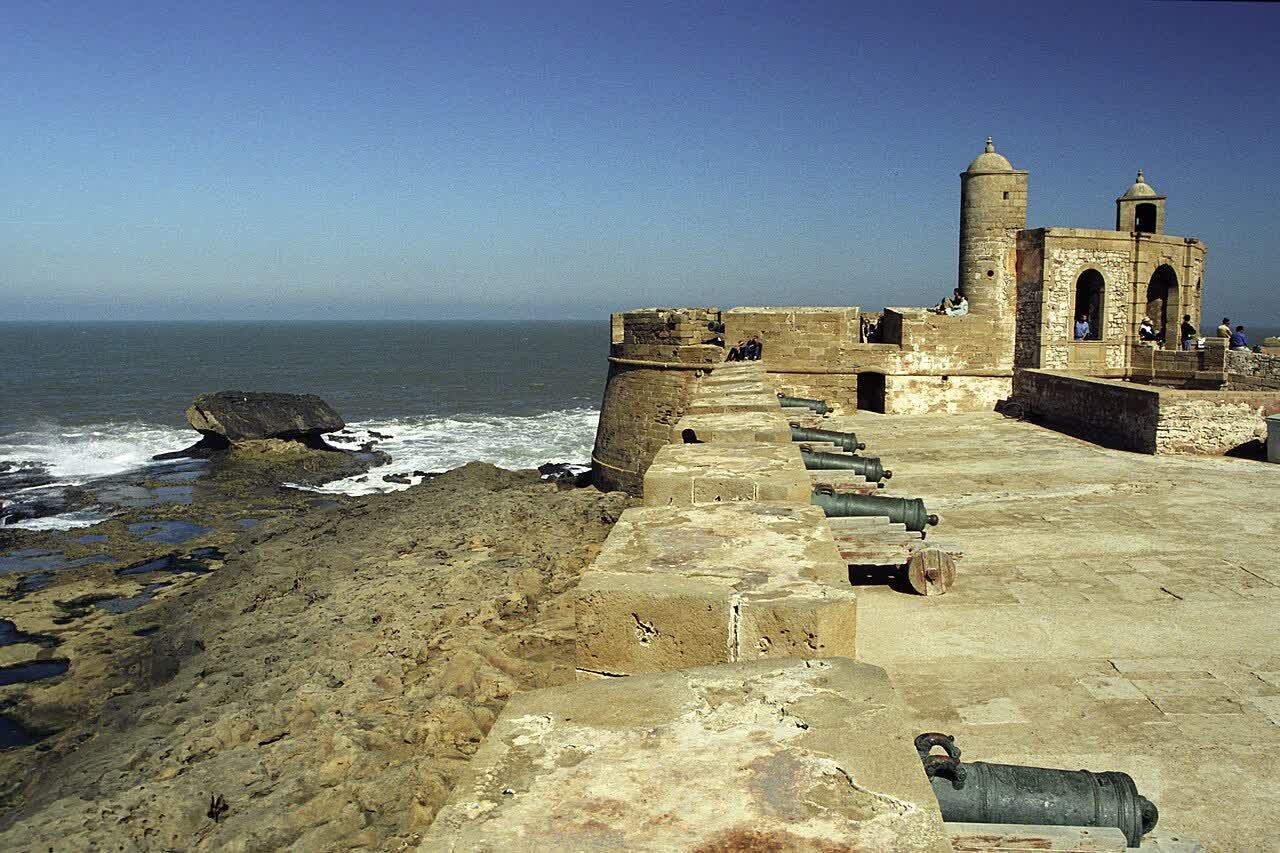

Essaouira is the only city I have ever wanted to visit because of its weather, and its weather is mostly a complaint. The wind blows there almost every afternoon, hard enough that the beach belongs to board-sailors more than swimmers, hard enough that the old hands have a hundred ways of describing it. I should say plainly that I have not been. I have been reading about it, looking at photographs, and building the kind of longing you can only build from a distance, where a place stays perfect because you have never had to find an ATM in it.
The wind is the first thing everyone mentions, so I will start there too. The reliable summer northeasterlies that sweep this stretch of the Moroccan Atlantic are the alizés, the trade winds, and Essaouira sits where they come ashore with very little to soften them. The tourism material likes to call it the Windy City of Africa, which is the sort of nickname I distrust until I read that the windsurfing world has quietly agreed with it for decades. The point that interests me is not that the wind is strong. It is that the wind is structural. You cannot understand the look of the place, the shape of its streets, the set of the boats in the harbour, without it.
Here is the detail that turned a vague wish into this essay. Essaouira’s medina was planned. Most Moroccan old towns grew the way old towns grow, by accretion and improvisation, lanes folding back on themselves until the map looks like cracked glaze. Essaouira does not. In the mid-18th century the sultan Sidi Mohammed ben Abdallah decided to build a port here from very little, partly to pull Atlantic trade away from rebellious Agadir to the south, and he had it laid out as a designed town: straight axes, right angles, a logic you can hold in your head. The plan is usually credited to a European military engineer, often named as Théodore Cornut, working in a style descended from Vauban’s fortress towns. (I am flagging the name and the attribution as the kind of thing that hardens into legend; the planned, orthogonal character of the medina is the part I am confident about.) A grid, walled against the sea and the wind, on the edge of a continent. I find that more romantic than any amount of organic charm, and I am suspicious of myself for it.
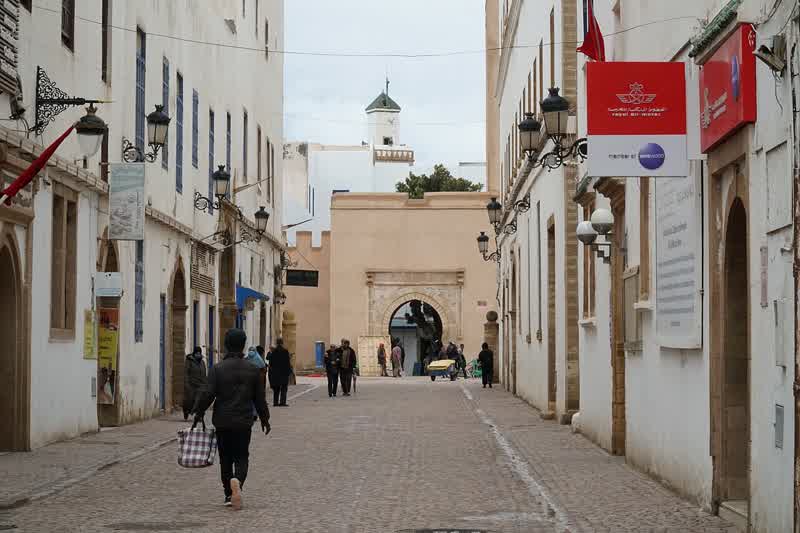

The city was Mogador before it was Essaouira, the name the Europeans used, and you still see it on old bottles and older maps. It was a working port in the most literal sense: a place that existed to move goods, with a large and prosperous Jewish merchant community at its centre, some of them traders licensed directly by the sultan. The mellah, the Jewish quarter, is still there in the street plan even where the community is not, and the restored synagogues are part of the layered history the medina’s UNESCO listing protects. I want to walk it knowing this, so the quiet is legible as loss and not mistaken for peace.
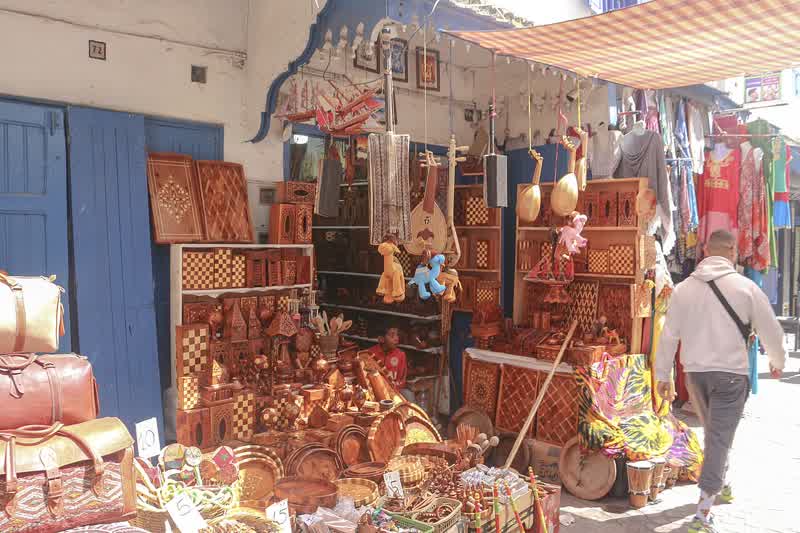
Now the wood, which is the other half of what pulls me. The local tree is the arar, the thuya, a slow-growing conifer of this corner of North Africa, and Essaouira’s woodworkers have built a centuries-old craft around it. The prized material is not the trunk but the burl, the loupe, the gnarled root-mass where the grain knots into something dense and figured, almost like marble made of wood. They carve it, turn it, and inlay it: boxes, chess sets, table tops, marquetry threaded with lemonwood and mother-of-pearl and thin lines of silver. The workshops cluster in the open fronts beneath the ramparts, and by every account the smell does half the selling, a resinous cedar-sweetness that gets into your clothes. I have read enough to know the craft has a shadow over it, because the tree is slow and the demand is not, and good thuya is harder to source than it was. I would rather know that going in than discover it on a placard.
_5.jpg)
The place where the wood and the wind and the history all sit on top of each other is the Skala, the sea bastion, the long rampart walk where a row of old European bronze cannons still points out at the Atlantic doing nothing at all. Orson Welles shot part of his Othello here around 1950, using the walls and the light, and the town has not let anyone forget it. I keep coming back to one image I have not even seen in person: the cannons, the spray, the carpenters working in the arches set into the same wall, the whole thing being scoured by that wind. A defensive fortification that is now mostly a place to watch the weather.
And the sound, which is the thing I said I was missing at the top. Essaouira is bound up with Gnaoua music, the tradition carried by the descendants of enslaved West Africans, devotional and rhythmic and built for trance. The signature instrument is the guembri, a three-stringed skin-covered bass lute, played under iron castanets that clatter like a train. Once a year, in June, the city hands itself over to the Gnaoua World Music Festival and fills past capacity. I notice that my instinct is to want to avoid exactly that week, to come when the guembri is being played in a doorway for no one, which is probably the most touristic instinct I have, the desire to have the authentic thing without the crowd that proves it is alive.
The surf and the kitesurf and the yoga retreats are real, and I am going to leave them mostly alone, because they are the part of Essaouira that has been written about already and the part that could be anywhere with a good wind. What I want is the working edge: the fish auction in the late afternoon, the blue boats, the men gluing slips of pale wood into dark burl in a shop the size of a wardrobe, the alizés doing their flat relentless work on all of it. The windswept, slightly inconvenient version of Morocco, the one that exists to do a job and not to be visited. I have not been. But I have a fairly clear idea now of the corner I would stand in to feel like I was in the way of something genuinely going on, and that, for a place you have never seen, is most of the way to being in love with it.
Where it is. A walled port city on Morocco’s Atlantic coast, in the Marrakech-Safi region, roughly 31.5°N. The medina is a UNESCO World Heritage Site (listed 2001 as the Medina of Essaouira, formerly Mogador).
Nearest gateway. Marrakech, about two and a half to three hours inland by road, is the usual jumping-off point; Essaouira has a small airport of its own with limited connections.
When to go. The alizés are strongest in late spring and summer, ideal for board sports and brutal for a still beach day; spring and autumn are gentler if you came for the medina and the workshops rather than the wind. The Gnaoua festival is in June and packs the city.
One thing to know. If you want thuya work, buy from the rampart-side ateliers where the carving is happening in front of you, and ask about the wood; the good burl is getting scarcer, and so is honesty about it.
Sources
- Photo: Jerzy Strzelecki, CC BY 3.0 · Skala ramparts
- Photo: Adam Harangozó, CC BY-SA 4.0 · Medina gate
- Photo: Mounir Neddi, CC0 (Public Domain) · Woodworking
- UNESCO World Heritage: Medina of Essaouira
- Wikipedia: Medina of Essaouira
- Wikipedia: Essaouira
- Wikipedia: Tetraclinis (thuya)
- NCBI: Tetraclinis articulata conservation
- Wikipedia: Othello (1951 film)
- Wikipedia: Sintir (guembri)
- Wikipedia: Gnawa and World Music Festival
- Festival Gnaoua official site
- Moment Magazine: Echoes from the Jewish Quarter