Kihnu, Estonia: the island where the skirt is Tuesday clothing

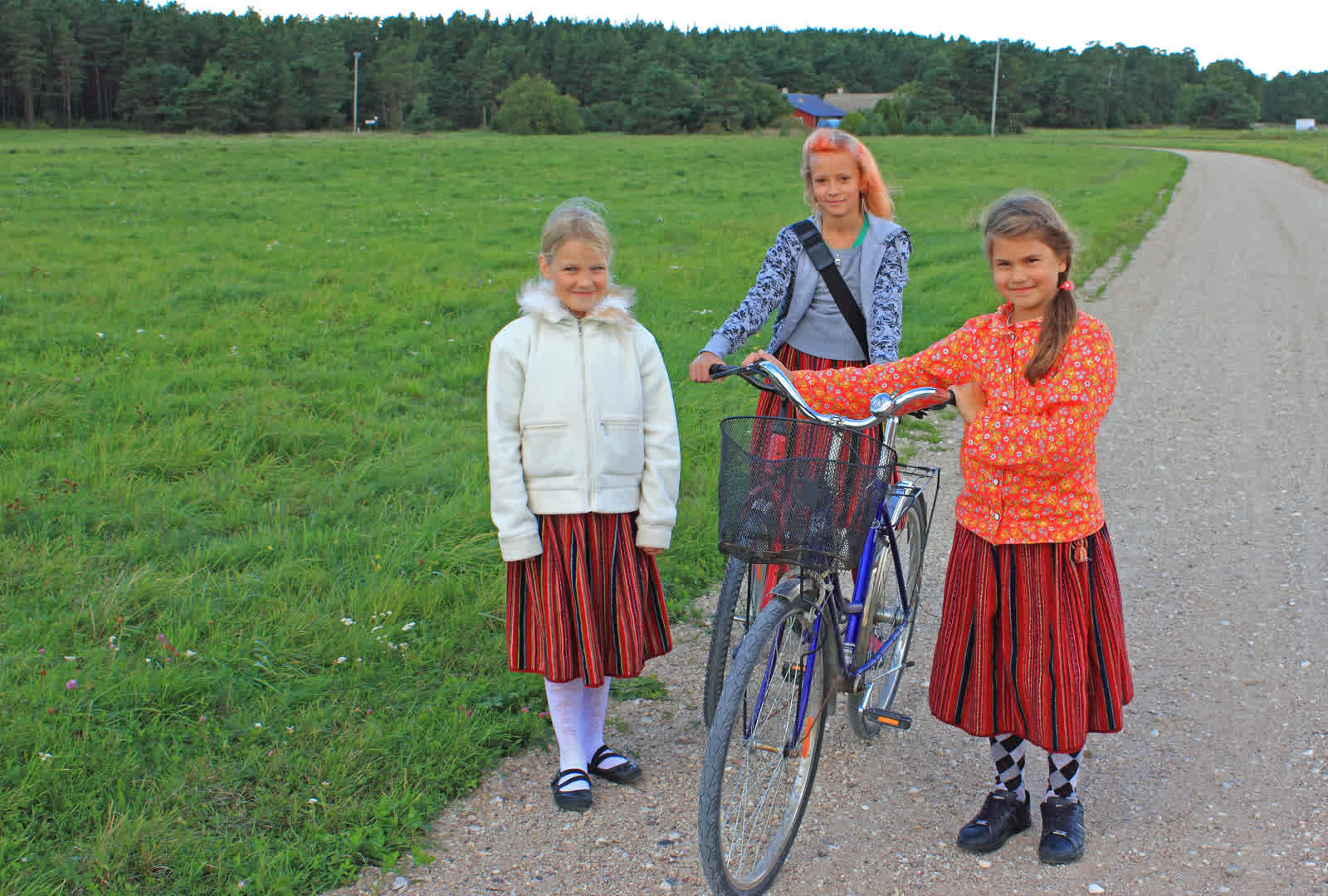

Kihnu is worth wanting for an unglamorous reason: the striped wool skirt there seems to be Tuesday clothing. Not a costume brought out for a coach party. Not a heritage performance with a start time. Just what a woman on a small island in the Gulf of Riga puts on to go do something.
I have not been there. I’ve been reading about Kihnu for a couple of weeks now, in the way you read about a place you’re building a case for, and the thing I keep circling isn’t the skirt itself. It’s the mechanism. Most places that advertise a living tradition have a seam in them somewhere, a moment where the ordinary thing turns and faces the visitor. What draws me to Kihnu is the claim, which I can’t fully test from a screen, that the seam isn’t there.
the mechanism is absence
Here’s the part that made me stop scrolling. The reason the traditions on Kihnu stayed in daily hands is that the men weren’t home. They were at sea hunting seals and fishing, for long stretches, while the women stayed to farm and keep the households going. UNESCO’s own wording is that Kihnu women became the principal custodians of the island’s songs, games, dances, wedding ceremonies and handicrafts. Continuity as a side effect of absence.
I find that more convincing than any preservation story built on pride or policy. Pride is a thing you have to maintain. Absence just leaves a gap, and whoever’s standing in the gap does the work, and the work becomes the ordinary shape of the year. Nobody on Kihnu had to decide to protect anything. Someone had to run the farm while the boats were out, and the running of it included the singing.
The wool skirt is called a kört, and it’s the object everything else hangs off. Red-dominant, striped vertically, woven on the island, and whatever else the stripes are doing, every skirt carries one red horizontal band at the hem. The colour is a code, and the axis I had wrong at first is that it’s mostly about age. Bright red predominates for children and young women. Middle-aged women move to part-red with blue in it, and elderly women to a modest blue. Mourning runs the same scale backwards: black for a husband, at least a year, or six months for a mother, then blue, then part-red. A widow never returns to full red. A bride doesn’t wear red at her own wedding either, and the island’s own site gives the reason: she is mourning her single life. So the skirt tells you roughly where a woman is in her life, which is a different and stranger thing than telling you whether the day is a festival.
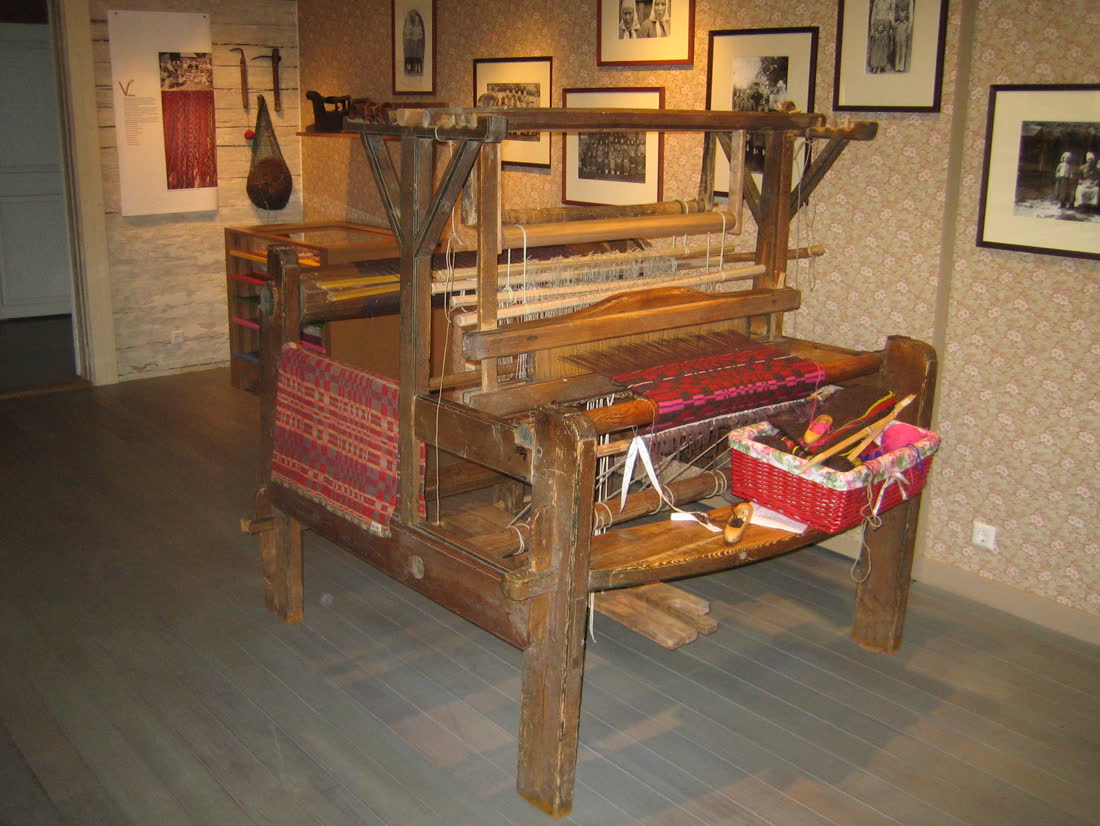

The men had their own marker, a troi, the patterned knitted sweater that dates to the second half of the nineteenth century. The Estonian Centre of Folk Culture is clear that it was both work clothing and festive clothing from the start: the practical garment for sealing and fishing, and the good sweater, at once. That’s the version of the object I’d want anyway. A thing can be the best you own and still be what you put on to go to work, and the two uses don’t have to fight. It’s expensive now, and it’s given as a gift, and I don’t think that’s a departure from what it was.
The island also has its own way of speaking, kihnu kiel, classed by linguists as a dialect of North Estonian but written to its own standard since the early 2000s and used in local publications, which is roughly what people mean when they treat something as its own language.
UNESCO proclaimed the Kihnu Cultural Space a Masterpiece of the Oral and Intangible Heritage of Humanity in 2003, and incorporated it into the Representative List in 2008. The listing covers Kihnu and its smaller neighbour Manija, not Kihnu alone. I’m ambivalent about it. Recognition is how a small place gets funding and how its language stops being treated as a mistake. Recognition is also a spotlight, and spotlights change what people do with their hands.
the reaching is part of it
The island is small. Roughly sixteen square kilometres, flat, and populated by somewhere between about five hundred and seven hundred people, depending on which official register you believe.
That spread is not a rounding problem. Statistics Estonia is cited for 490 at the start of this year. The Association of Cities and Municipalities gives 676 for the same date. The Pärnu County portal says slightly over seven hundred, and credits Statistics Estonia for it. Residency register against resident population, presumably. On an island this size a gap of two hundred people is its own kind of information, and I notice that the question I opened with, what the place is like on an ordinary day, starts with a number nobody agrees on.
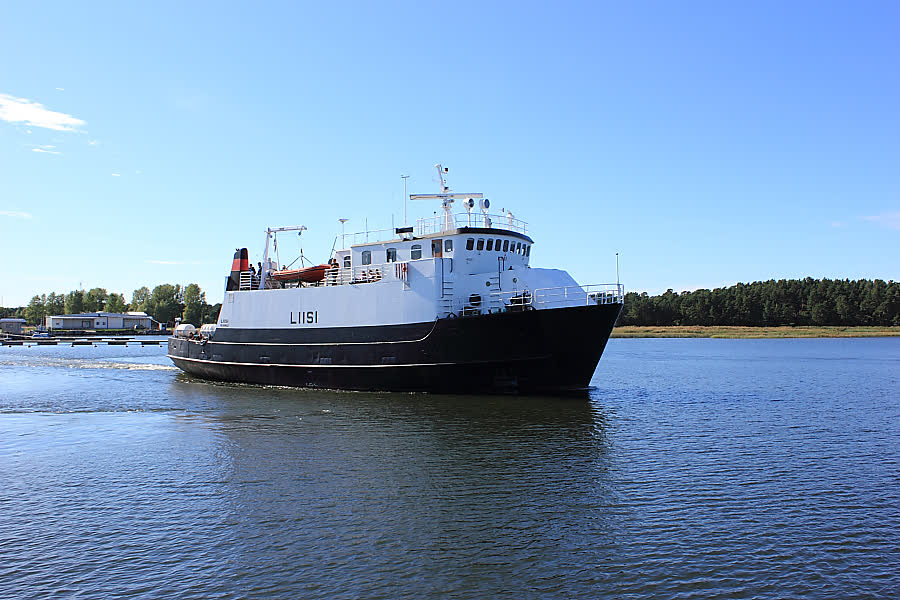

You get there by ferry from Munalaid, a harbour about forty kilometres from Pärnu. The island’s own site is emphatic that the boat no longer leaves from Pärnu itself, which tells you how many people still turn up at the wrong quay.
In hard winters there’s an ice road, though it’s a different crossing: Lao to Kihnu, twelve kilometres, off the Tõstamaa peninsula. It doesn’t open every year. This past February it was open for eight days, the 14th to the 22nd, and shut when the access points went under seawater and above-zero temperatures took the rest. Daylight hours only, nothing over 2.5 tonnes, and you drive it with your seatbelt unfastened, because the thing you need to be able to do in the worst case is get out. And when the ice defeats the ferry, ridging up across the route, a hovercraft takes the passengers instead. A handful of them, almost no cargo, no vehicles.
I want to be honest that this was a large part of the appeal, and that I had it wrong. I’d built the crossing into three tidy seasons, boat then hovercraft then ice road, and it isn’t that. The ferry breaks ice perfectly well on its own. The hovercraft is what happens when the ice wins or the vessel is out of service, which means it’s a contingency and not something you can put in a calendar. That’s a small correction and it embarrassed me more than it should have, because the version I’d invented was the version that flattered me: a place with a secret third timetable. The real answer is duller and better. Sometimes the sea makes the crossing hard and someone solves it that morning.
Sidecar motorcycles are the island’s signature vehicle and still everywhere, which sounds like an affectation until you think about a flat sixteen square kilometres, a ferry that limits what you can bring across, and the general problem of moving a person and their shopping. There’s a mostly surfaced ring road now, twenty-three kilometres of it, about four fifths of that with a proper surface. Still, the sidecar is the cheapest machine that solved the real problem, and I like it for the same reason I like the skirt. Nobody arrived at it by deciding what an island ought to look like.
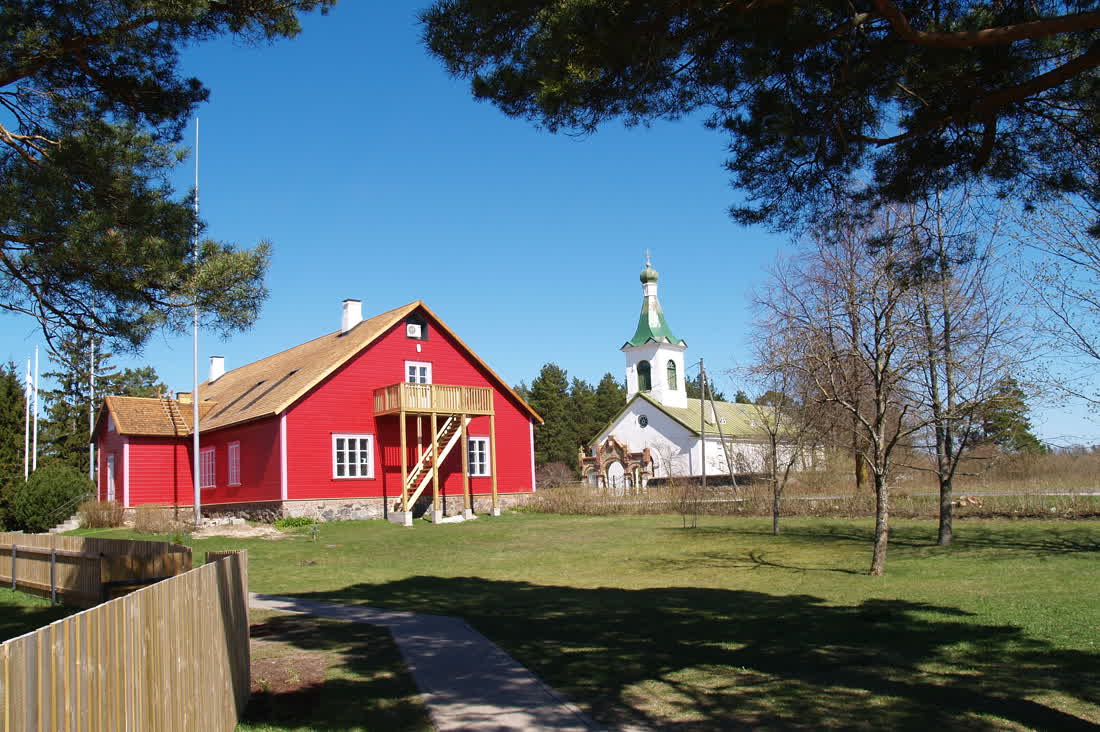

There’s a small museum. There’s St Nicholas, built as a Lutheran church in 1784, handed to the Orthodox congregation after almost the whole island converted in 1846 and 1847, with the onion dome added onto the bell tower that was already standing. A Lutheran frame wearing an Orthodox roof, on the south-western edge of a Lutheran country. And there are two names that come up in everything I’ve read. Kihnu Jõnn, born Enn Uuetoa, the sea captain who went down with the Rock City off the Danish coast in 1913 and whose remains came home to the island cemetery on 29 July 1992, seventy-nine years later. And Kihnu Virve, the folk singer who carried the island’s songs into the age of recordings and died on 10 December 2022 at ninety-four. Every account of Kihnu passes through her, which tells you something about how much of a culture can rest on one person’s memory and willingness to keep using it.
what I can’t know
Here’s the limit, and it costs me the thesis if it goes the wrong way.
Everything I’ve described, I’ve read. What I cannot know from reading is what Kihnu is like on a Tuesday in February with no visitors on it. That’s the exact day the whole essay depends on. The claim I’ve made is that the skirt is ordinary clothing, and the only test of ordinary is what happens when nobody is looking, which is by definition a thing I have never seen and cannot arrange to see, because the instant I get off the boat there’s someone looking.
The island’s own tourism site is more honest about this than I was. Some women really do wear the kört every day, it says, and some don’t; a Kihnu woman wears her traditional clothing when she feels like it, not for showing off. That’s not the uniform I was picturing, and it’s better. A rule can be performed. A mood can’t.
Which leaves the uncomfortable part. My interest in Kihnu is precisely the kind of outside attention that turns an ordinary thing into a performed one. A few hundred people, a UNESCO listing, a steady supply of writers arriving to admire the unselfconsciousness of the place: that pressure is real, and I’d be adding to it. I don’t have a resolution for this. I’m not going to pretend that wanting to go quietly is meaningfully different from wanting to go. The best I can offer is that I’d rather go in the wrong month and see the place tired than go in July and see it at its best.
So I’d go in the bad weather, and I’d take the ferry like everyone else, and the ferry is called the Kihnu Virve. I want to see whether the thing holds on a February Tuesday, and if it doesn’t hold, I want to have been honest enough to have gone looking for the day when it wouldn’t.
The other reason I want to see winter is smaller and probably wrong. I want to know if the skirts are actually warm. Every photograph I’ve seen is of wool over what looks like an unforgiving amount of wind, and something in me refuses to believe a garment can be both that beautiful and that practical without a catch. Somebody on that island knows the answer and has known it their whole life and has never once thought it was interesting.
the facts
Kihnu is an island in the Gulf of Riga, in Pärnu County, off Estonia’s south-western coast: about sixteen square kilometres, flat. The population depends on which official source you ask: 490 at the start of 2026 attributed to Statistics Estonia, 676 at the same date from the Association of Cities and Municipalities, slightly over 700 from the Pärnu County portal. Call it five to seven hundred and don’t pretend to more precision than the registers have. The ferry runs from Munalaid harbour, roughly forty kilometres from Pärnu, operated by AS Kihnu Veeteed. It does not run from Pärnu itself. The Lao–Kihnu ice road is a separate crossing and an unreliable one, open only in winters cold enough to make it and sometimes for a week or less, daylight hours, vehicles under 2.5 tonnes. There is no hovercraft season to book: when ice ridging defeats the ferry or the vessel is out, Kihnu Veeteed puts a hovercraft on the route for a handful of passengers and no cars. Summer is the reliable season and the busy one. Check the operator’s current timetable before committing to dates, because no printed winter schedule survives contact with a warm January.
Sources
- Photo: KalervoK, CC BY-SA 4.0 · hero.jpg
- Photo: Mona-Mia, CC BY-SA 3.0 · kihnu-handloom.jpg
- Photo: Ivo Kruusamägi, CC BY-SA 3.0 · kihnu-church.jpg
- Photo: KalervoK, CC BY-SA 3.0 · kihnu-ferry.jpg
- https://www.kihnurand.ee/en/the-island-of-kihnu/
- https://et.wikipedia.org/wiki/Kihnu
- https://ilusadeestipaigad.ee/kohad/parnumaa/kihnu-vald/
- https://en.wikipedia.org/wiki/Kihnu
- https://en.wikipedia.org/wiki/Kihnu_Parish
- https://www.elvl.ee/elanike-arv
- https://parnumaa.ee/elu/parnumaa-omavalitsused/kihnu-vald/
- https://et.wikipedia.org/wiki/Kihnu_vald
- https://visitkihnu.ee/en/kihnu-history-and-nowadays
- https://visitkihnu.ee/en/how-to-get-to-kihnu
- https://kihnu.ee/kuidas-saab-kihnu/
- https://mereviki.vta.ee/mediawiki/index.php/Kihnu_Veeteed
- https://visitkihnu.ee/en/faq
- https://www.err.ee/1610083540/parvlaevade-ormso-ja-kihnu-virve-meeskonnad-korraldavad-hoiatusstreigi
- https://www.err.ee/1610011507/kihnu-liinil-laks-asenduslaev-rikki-ning-liinile-saadetakse-soela
- https://transpordiamet.ee/en/news/estonian-transport-administration-permanently-closes-ice-roads-vormsi-and-kihnu
- https://news.err.ee/1609941515/gallery-official-ice-road-to-kihnu-island-opens-saturday
- https://et.wikipedia.org/wiki/T%C3%B5stamaa_poolsaar
- https://www.err.ee/1609955306/transpordiamet-sulgeb-vormsi-ja-kihnu-jaateed
- https://parnu.postimees.ee/8416068/keskpaeval-avati-kihnu-ametlik-jaatee
- https://transpordiamet.ee/en/roads-waterways-airspace/road-maintenance/ice-roads
- https://www.err.ee/1609941506/galerii-transpordiamet-avas-laupaeval-ametliku-jaatee-kihnu
- https://www.transpordiamet.ee/uudised/laevauhendus-kihnuga-taastub-laupaeval
- https://en.wikipedia.org/wiki/Kihnu_Veeteed
- https://majandus.postimees.ee/7160952/asendusparvlaev-reet-jattis-jaa-tottu-kihnu-saare-laevauhenduseta
- http://www.kultuuriruum.ee/en/kasitoo-ja-rahvariided-eng/
- https://www.trc-leiden.nl/trc/index.php/en/blog/1220-costumes-from-the-island-of-kihnu-estonia
- https://visitkihnu.ee/en/kihnu-handicraft-and-traditional-ethnic-wear
- https://rahvakultuur.ee/2020/03/18/kihnu-troi-kudumine-ja-kandmine/
- https://rahvaroivad.ee/regioonid/saared/kihnu/kihnu-mees
- https://rahvakultuur.ee/2020/03/17/kihnu-keel/
- https://eki.ee/uudis/mis-on-keel-murre-ja-murrak/
- https://ich.unesco.org/en/RL/kihnu-cultural-space-00042
- https://www.unesco.org/en/intangible-cultural-heritage/kihnu-cultural-space
- https://visitestonia.com/en/where-to-go/kihnu-island
- https://visitestonia.com/en/kihnu-st-nicholas-church
- https://visitparnu.com/en/objekt/kihnu-st-nicholas-church/
- https://puhkaeestis.ee/et/malestuskivi-kihnu-jonnule-ehk-laevakapten-enn-uuetoale
- https://en.wikipedia.org/wiki/Enn_Uuetoa
- https://visitestonia.com/en/kihnu-jonn-alias-enn-uuetoa-memorial
- https://eestimonumendid.wordpress.com/kihnu-vald/
- https://rannatee.ee/kaardirakendus/kultuur-ja-ajalugu/kihnu-kalmistu/
- https://www.err.ee/1608816181/suri-rahvalaulik-kihnu-virve
- https://en.wikipedia.org/wiki/Kihnu_Virve
- https://uudis.net/5451131
- https://saartehaal.postimees.ee/7667489/suri-rahvalaulik-kihnu-virve
- https://puhkaeestis.ee/et/kuhu-minna/kihnu
- https://visitparnu.com/kihnu-reesuratas/
- https://visitestonia.com/en/kihnu-museum
- https://visitparnu.com/en/objekt/kihnu-museum/
- https://visitparnu.com/en/kihnu-island/
- https://www.nationalgeographic.com/travel/article/pictures-kihnu-island-culture-matriarchy
- https://www.riigiteataja.ee/akt/102072020009
- https://news.err.ee/1609940903/blizzard-conditions-mean-planned-kihnu-vormsi-ice-roads-will-not-open
- https://silvertraveladvisor.com/articles/blog-destination-features-europe-estonia-kihnu-island-where-the-past-is-always-present/
- https://www.wikidata.org/wiki/Q10975553