Trieste: the city that outlived its empire


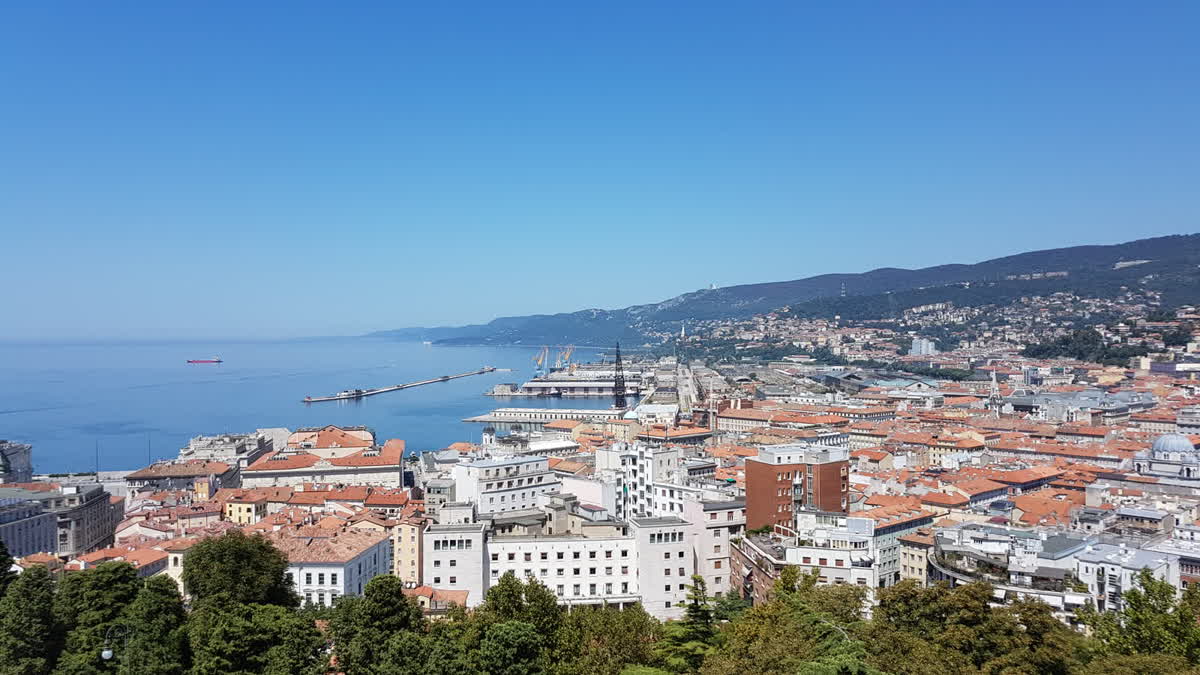
Trieste was built to give a landlocked empire a coastline. In 1719 the Habsburg emperor Charles VI declared it a free port, a porto franco, and for the next two centuries Vienna ran its sea trade through this notch in the Adriatic, the busiest outlet to the sea an Alpine empire owned. Then in 1918 the empire came apart, and the city that had been the lungs of a continental power woke up as a border town in a country that already had Genoa and Naples and Venice. That is the thing I keep circling back to. Trieste is a place built for a job that stopped existing, and it has spent a century working out what to be instead.
I have not been to Trieste. I have been reading about it for most of a month, which is a partial and bookish kind of knowing, and I want to say that plainly before I say anything else, because the wanting is most of what I have here. I have a stack of other people’s sentences, a map open in another tab, and the slightly embarrassing certainty that I would understand something the moment I stepped off the train at Trieste Centrale. The honest version is that I am writing around a hole where the visit should be.
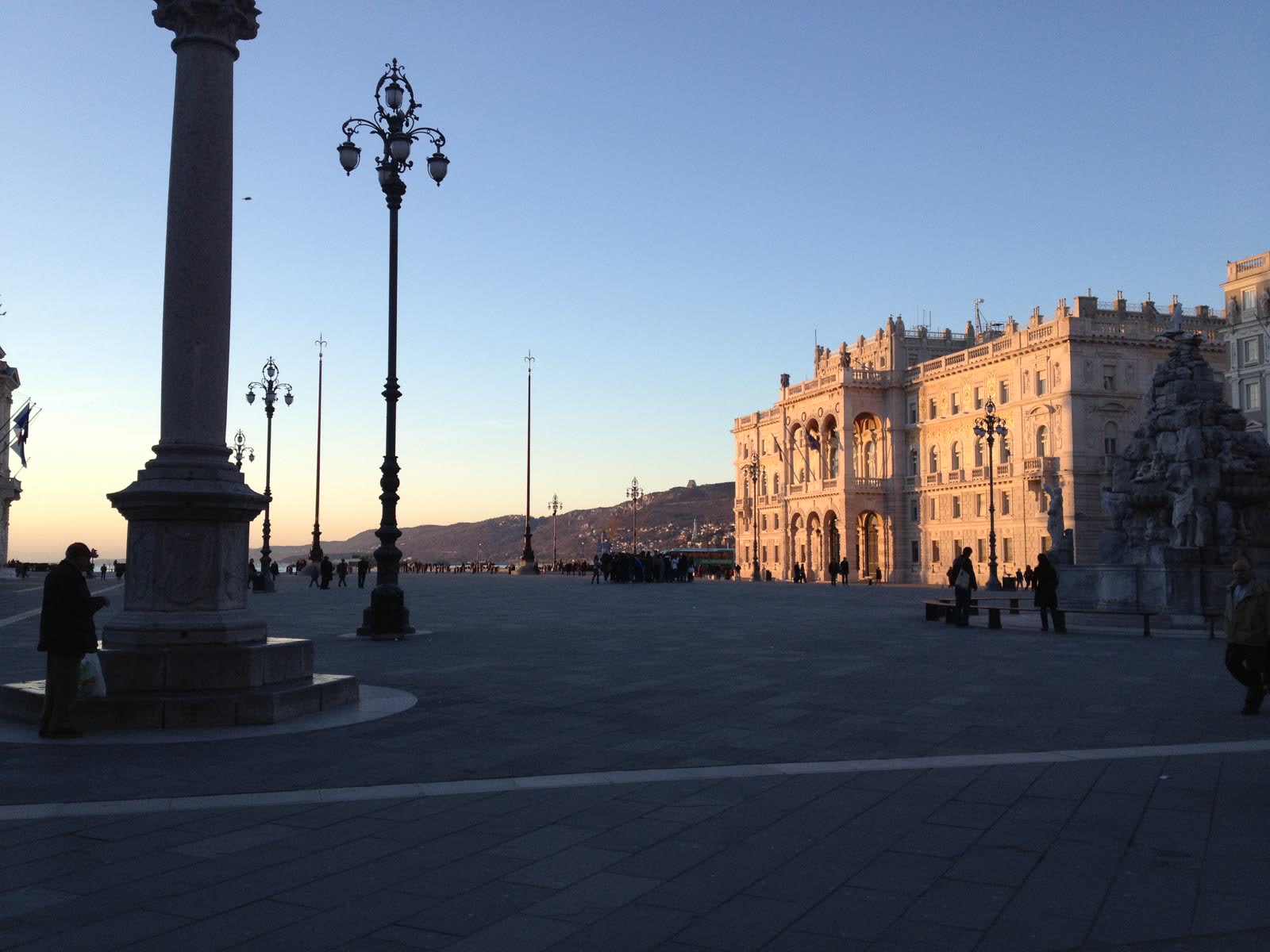
So let me tell you what pulled me in, which was an architectural fact that reads like a metaphor. Piazza Unità d’Italia is said to be the largest sea-facing square in Europe. Three sides of Habsburg-era stone, the Municipio with its clock tower, the old Lloyd Triestino shipping headquarters, and then the fourth side simply stops and the Adriatic begins. A piazza that opens onto open water instead of closing into a courtyard. Vienna built its grandest civic room and then left the wall off the seaward end, as if the whole point of the city was to face away from the empire and toward everywhere the ships could go. And the square is not famous. That detail did more to convince me than any photograph: a space that size, that deliberate, and most travelers route past it to Venice, an hour and a half to two hours back down the coast.

the coffee has its own grammar
Here is where the bookishness starts to pay for itself. Trieste runs on coffee in a way that needs translating even for other Italians, and the vocabulary is the kind of local fact I trust more than any description of atmosphere. Order un nero and you get an espresso, black, the default. Order un capo and you get it cut with a little milk, a macchiato by another name. Ask for un capo in b, the b for bicchiere, and it comes in a small glass instead of a cup. A visitor who orders a “macchiato” out loud is marking themselves as from elsewhere. I find this almost unreasonably appealing, the idea that a city kept its own private words for the most ordinary transaction of the day.
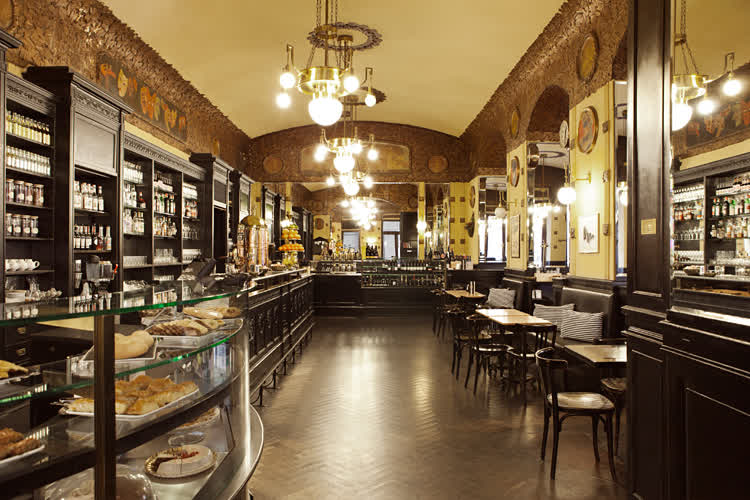
The coffee is not an affectation. Trieste was the port the beans came through for the empire, and it still is one: illycaffè was founded here in 1933 and never left. The cafés that grew up around the trade are the part I most want to test against reality. Caffè San Marco opened in 1914, was wrecked in the First World War, and reopened, and people still go there to read and write and argue, not to photograph the ceiling. I have read that Italo Svevo and Umberto Saba sat in these rooms. What I cannot verify from a desk is whether the places still work the way the books claim, or whether they have quietly become museums of themselves with a good espresso machine. That is exactly the kind of thing you can only learn by sitting in one for an afternoon, and I have not sat in one.

the ghosts wrote in three languages
The literary part is what most people know, if they know anything, and it is usually just Joyce. James Joyce arrived in 1904, broke and twenty-two, and taught English at the Berlitz school to feed himself. He stayed, on and off, until the war scattered him in 1915. He drafted Dubliners here, finished A Portrait of the Artist as a Young Man, and began Ulysses. The standard claim, and I think it is more than a tour-guide flourish, is that Leopold Bloom could only have been imagined in a city like this one, polyglot and full of a Jewish merchant class, a Dublin reimagined through a Mediterranean port. Late in life, in Finnegans Wake, Joyce dropped the line “and Trieste, ah Trieste ate I my liver.” Eleven years. Longer than he lived anywhere as an adult.
But Joyce is the thread, not the cloth. The reason I would go is the other two. Italo Svevo was the pen name of Ettore Schmitz, a Triestine businessman who ran a marine-paint company and wrote novels nobody read until Joyce, his English student, championed them. His La coscienza di Zeno (1923), Zeno’s conscience, is set in this city and narrated by a man who cannot stop analyzing his own failures, which feels like the right book for a place that outlived its reason for being. And Umberto Saba, the poet, kept an antiquarian bookshop on Via San Nicolò that still carries his name. A working bookshop, not a plaque. The poet had a day job selling old books, and the shop is still selling them.
What none of these names quite captures is the thing the whole city is built on, which is that it was never simply Italian. The hinterland above Trieste, the limestone plateau called the Carso in Italian and the Kras in Slovene, is Slovene-speaking country, and the city has a Slovene minority still. The street names argue in two languages. The food is Austrian as much as Italian, jota soup and goulash and strudel beside the seafood. In 1920 Fascist squads burned the Narodni dom, the Slovene community’s hall in the center of the city, an early and deliberate act of the violence that was coming. I include that because the multilingual charm of Trieste was also, at points, a wound, and I do not want to write the place as a tidy mosaic when the seams were paid for.
the wind has a name and a temper
Then there is the Bora, the wind, and this is the part I am least equipped to write, which is why I have to be careful with it. The Bora is a cold, dry katabatic wind that pours off the Carso and down onto the city, and in its strongest gusts it can exceed 100 kilometers an hour. I have read that Trieste once strung ropes along certain exposed streets for people to hold onto, and that the wind has a working vocabulary of its own, a bora chiara that comes with clear skies and a bora scura that comes with cloud and rain. I can give you the numbers and the names. I cannot tell you what it is like to lean into it crossing that enormous open piazza, or to hear it work at the shutters all night, and the honest cost of writing this essay from a desk is that the Bora is precisely the thing a desk cannot reach. A wind is not a fact. It is a thing that happens to your body.
Here is the opinion I will defend. A city that loses its purpose is more interesting than a city that keeps one, and Trieste is the proof. Venice kept its purpose and became a performance of itself, a place you visit to confirm the postcard. Trieste lost the empire it was built to serve and had no choice but to become something stranger and quieter: a provincial Italian capital of around 200,000 people, carrying the architecture of a vanished superpower, speaking three languages out of habit, keeping its grand café rooms in working order because the alternative was to admit the grandeur was over. The melancholy that Jan Morris wrote a whole book around, Trieste and the Meaning of Nowhere, is not decline. It is what survival looks like when the original reason is gone and the city keeps going anyway, out of something closer to character than to nostalgia.
I think that is why I have not booked the train yet, and why I keep reading instead. There is a version of me that is a little afraid the real place will resolve the question, and I have started to like the question more than I want an answer. That is not a good reason to stay home. It is just the true one. A city built to face the sea on behalf of an empire that no longer exists has been waiting a hundred years for nobody in particular, and reading about it is not the same as standing where the piazza stops and the water starts.
the facts
Trieste sits at the head of the Adriatic in Friuli Venezia Giulia, in Italy’s far northeast, a few kilometers from the Slovenian border. The nearest gateways are Trieste’s own Centrale station (direct trains from Venice in an hour and a half to two hours) and Trieste Airport at Ronchi dei Legionari. Piazza Unità d’Italia, the old cafés, and Saba’s bookshop are all walkable in the compact center. Go expecting wind: the Bora is strongest in the colder months, and at full strength it is a genuine event. Order un nero for an espresso and un capo in b for a macchiato in a glass, and you will be understood as someone who did a little homework.
Sources
- Photo: Stefanoasr, Public Domain · img/piazza-unita-sunset.jpg
- Photo: StefanWedrac, CC BY-SA 4.0 · img/trieste-harbor-cityview.jpg
- Photo: Alexandros Delithanassis, CC BY-SA 4.0 · img/caffe-san-marco-interior.jpg
- Port of Trieste 300th Anniversary
- Britannica: Trieste
- Discover Trieste: Piazza Unità d'Italia
- Gambero Rosso: Trieste coffee vocabulary
- illycaffè company history
- Wikipedia: Caffè San Marco
- Museo Joyce Trieste: chronology
- Comune di Trieste: The Trieste of James Joyce
- Wikipedia: Italo Svevo
- ILAB: Libreria Antiquaria Umberto Saba
- Wikipedia: Narodni dom (Trieste)
- Wikipedia: Bora (wind)
- Simon & Schuster: Trieste and the Meaning of Nowhere