Gyumri, Armenia: the city that kept making things

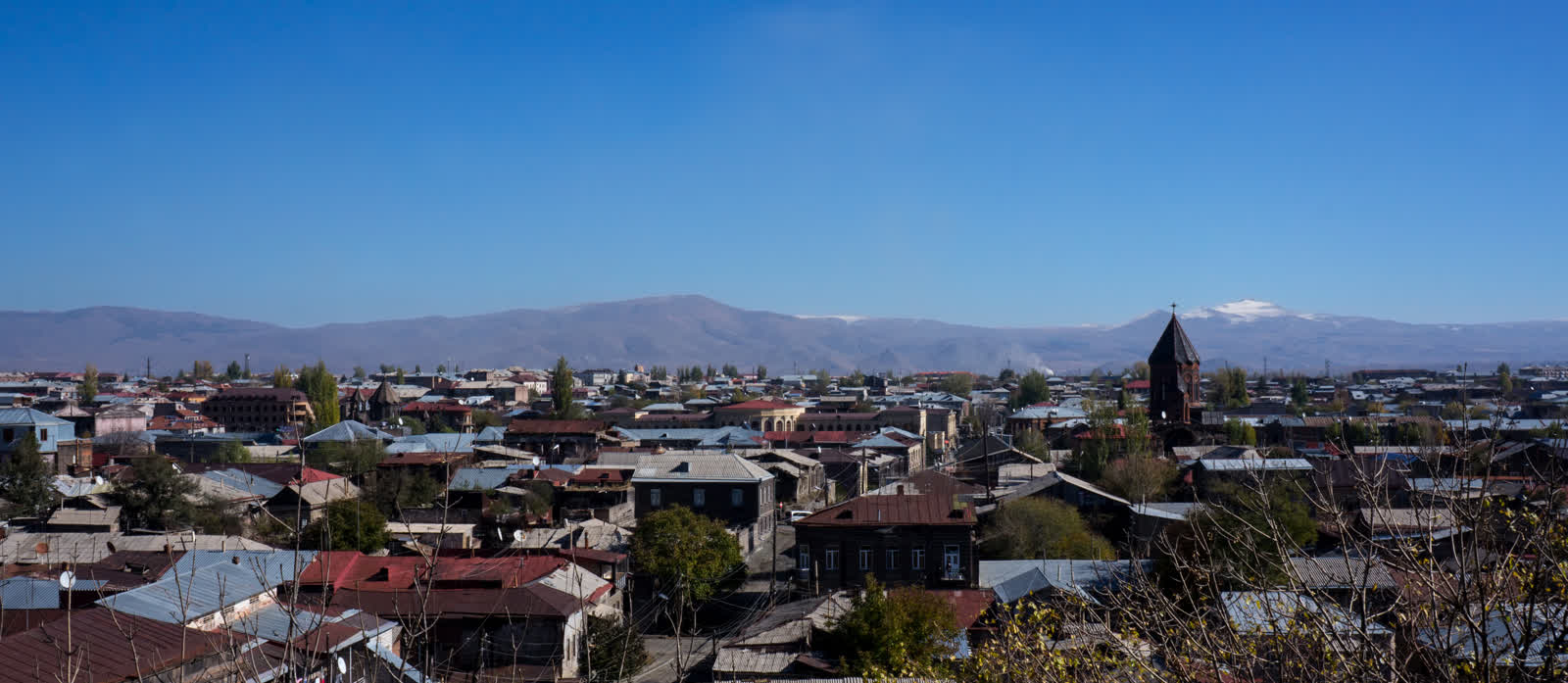

The thing that hooked me about Gyumri is that the crafts survived the disaster better than the buildings did. A city can lose most of itself in half a minute and still know, in its hands, how to work copper the next morning. That is the claim I want to defend, and I should say plainly: I have not been there. I have been reading about it, for weeks now, the way you circle a place you cannot yet afford the time to reach.
So this is a report from the desk, not the road. Take it as longing with citations.
Gyumri sits in Shirak Province, up in the northwest corner of Armenia, near the Turkish border and high enough that the winters are the kind people warn you about. It has been renamed more than once, which is its own small history of empires passing through: Alexandropol under the Russians, Leninakan under the Soviets, Gyumri again since 1992. The old town core still carries the name Kumayri, and that is the part I keep returning to on the map, the dense grid of low stone houses that predates all the renaming.
The stone is the first fact, and it is a geological one before it is an architectural one. The buildings are cut from tuf, the volcanic tufa that the whole Armenian highland is made of. In Gyumri a lot of it is dark, a grey that reads almost black in photographs, streaked in places with the warmer red-orange tuf that Armenia is better known for elsewhere. It is soft enough to carve when fresh and it hardens in the air, which is why the doorframes and window surrounds in the old quarter have that worked, deliberate look. A mason could cut ornament into a lintel without a workshop full of specialized tools. The material did half the arguing.
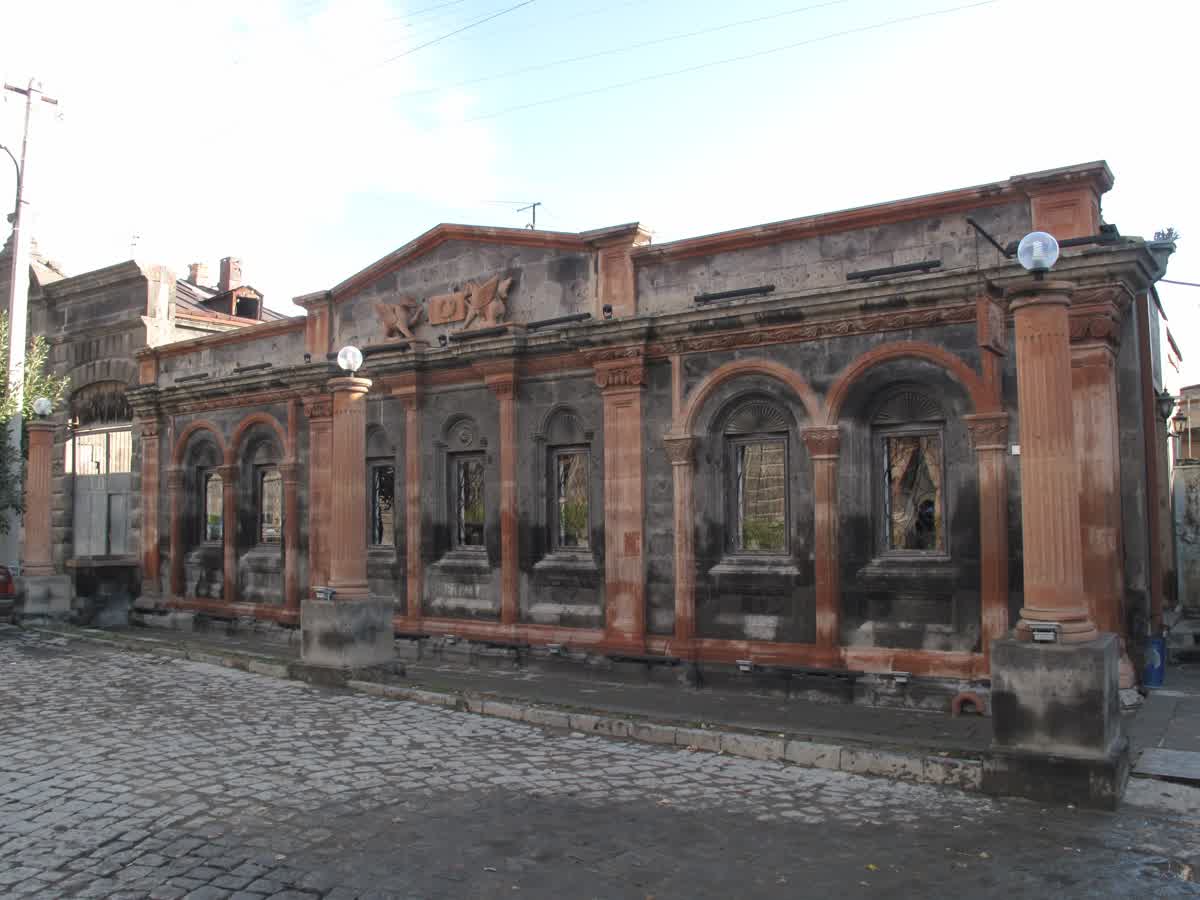

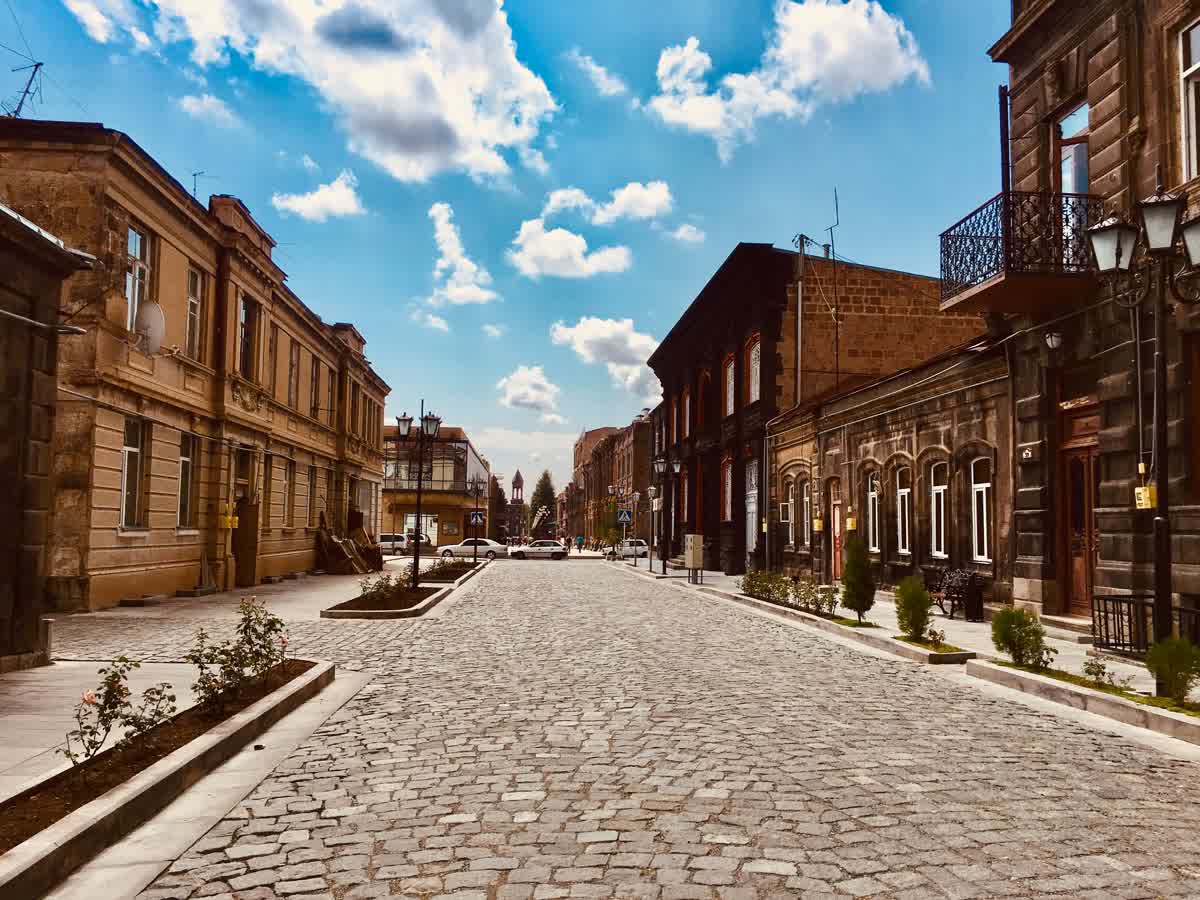
I want to be careful here, because the temptation with a place like this is to let the scenery do the talking. One verified object beats a paragraph of atmosphere. So: the object is the house. Kumayri holds a large stock of nineteenth and early twentieth century urban houses, the merchant-and-artisan architecture of Alexandropol, and enough of it stayed standing or was rebuilt that the district is protected. Two-story, stone, with wooden galleries and interior courtyards. Not a museum reconstruction of a town. An actual lived-in one, which is rarer and harder.

Now the part that makes me want to buy the ticket.
The pull is that the craft names are still the family names. Cobblers, blacksmiths, coppersmiths clustered in the old quarter, the trade carried down as inheritance rather than hobby. I cannot personally vouch for a specific coppersmith or read a specific surname off a shopfront yet, and I am not going to invent one to sound like I have. What I can say is that Gyumri’s identity as a city of craftspeople and, relatedly, of humor and music is consistent across everything I have read. The coppersmith is not a costume the city puts on for visitors. It is closer to a census category.
And then the mushurba. This is the detail that turned a general interest into a specific one. It is a two-chambered drinking cup, worked in copper, and it sings when you drink from it. The sound is not a legend someone attached to it later. It comes from the double wall: as you tip the cup, air escapes from the hidden inner chamber and the liquid bubbles past it, and the whole vessel hums. The making of it has narrowed almost to a single pair of hands. Eduard Zhamkochyan, Edik, turns up everywhere I look as the last coppersmith in Gyumri still making the cups the traditional way, and he is teaching his son so that “last” does not slide into “final.” Armenian outlets have written him up. The cup is real, the man is real, the singing is a genuine acoustic effect and not a rumor I am dressing up to sound well traveled. What I cannot do from a desk is hear it. That is the thing I would go to check, camera off, just listening.
What I am steadier on is the date, because the date is the whole reason the resilience angle is not sentimental. On the seventh of December, 1988, the Spitak earthquake hit northern Armenia. Leninakan, as Gyumri was then, was one of the cities it broke. The toll across the region ran into the tens of thousands. Housing collapsed at a scale that left people in temporary shelters for years, in some cases far longer than anyone planning the recovery would have admitted at the time. This is not distant history that the city has tidied away. People alive and working in Gyumri now remember the ground moving.
Here is what I keep turning over. A place hit that hard has every reason to become a place that only talks about the thing that hit it. Grief is a full-time occupation and it makes a compelling brand. Gyumri, from everything I can find, did not do that. It rebuilt slowly and unevenly, it argued with its own reconstruction, and it kept the workshops going through the rubble and the temporary housing and the emigration that followed. The copper kept getting worked. That is the sentence that will not leave me alone: it kept making things. Not “it recovered,” which is a word for economies. Making, which is a word for hands.
I am wary of my own angle, and I should admit the specific risk in it. From a desk in another country, “resilient craft city” is an easy story to fall in love with, and easy stories tend to flatten the people inside them into a lesson. The real Gyumri surely includes the young people who left and did not come back, the winters that are brutal, the reconstruction money that did and did not arrive. My affection for the copper cup does not get to erase any of that. If I go, part of what I would be going to correct is my own tidy version of the place.
But the core of it, I think, holds. There is something worth crossing a continent to understand in a city that treats a craft as more durable than a building. We tend to assume it runs the other way, that stone outlasts skill, that the monument is the permanent thing and the knowledge in someone’s fingers is the fragile one. Gyumri seems to have quietly disproved that, and it did not set out to make a point. It just had coppersmiths, and it kept them.
I would drink from the cup if Edik let me, and I would try very hard to hear it. And if it turned out to be an ordinary cup made by an extraordinary person, in an ordinary house cut from black volcanic stone, in an old quarter that came through the worst day of its century still knowing its trades, that would be more than enough reason to have gone.
The facts, briefly, for anyone readier to move than I am. Gyumri is in Shirak Province, in the far northwest of Armenia, close to the Turkish border. The usual gateway is Yerevan, the capital, roughly a couple of hours south by road, a little longer by rail, though Gyumri has its own airport (Shirak) with limited service if the timing lines up. Go in the warmer months if you can help it: the elevation makes winters long and hard, which is charming from a distance and less so in February. The one rule that matters more than any opening hour is that the old quarter is a working, inhabited district and not a set, so the craft is best met the way you would meet a neighbor’s, by walking in slowly, buying something, and letting the person whose family name is the trade tell you how much they feel like showing you today.
Sources
- Photo: Armenak Margarian, CC-BY-SA 4.0 · img/hero.jpg
- Photo: AnnHairapetian, CC-BY-SA 4.0 · img/kumayri-abovyan-street.jpg
- Photo: Sebastian Muller, CC-BY-SA 2.0 · img/old-gyumri-tuf-facade.jpg
- en.wikipedia.org/wiki/Gyumri
- britannica.com/place/Gyumri
- gyumricity.am
- en.wikipedia.org/wiki/Kumayri_historic_district
- urgnalgyumrium.am
- armgeo.am/en/armenian-tuff
- en.wikipedia.org/wiki/Tuff
- armgeo.am — disappearing crafts
- hetq.am
- civilnet.am
- en.wikipedia.org — 1988 Armenian earthquake
- msf.org — earthquake response
- en.wikipedia.org — Shirak Airport