Ghent, Belgium: the city that kept its day job


Ghent is the Belgian city that never agreed to become a postcard. That’s the whole reason I can’t stop thinking about it, and it’s worth saying up front that I’ve never set foot there. Everything below is longing, assembled from maps and photographs and other people’s sentences, which is a dishonest way to love a place and I’m doing it anyway.
Here’s the case, though. Bruges froze itself around 1500 and started selling tickets to the result. Antwerp took the diamond money and the container port and grew a glass skyline to match. Ghent did the least glamorous thing a medieval city can do, which is keep working. More than 80,000 students across the city’s universities and colleges share the old core with the tourists, which means the guild houses aren’t backdrops, they’re on somebody’s route to a seminar. The barges still move on the Leie. A city that never had to choose between its past and its present because it kept using both is rarer than it sounds.
Start with the building that gave me the whole obsession. The Boekentoren, the Book Tower, designed by Henry van de Velde in the 1930s and opened during the war, holds around three million volumes in a concrete stack that looks like something drawn by a person who trusted the future. On the roof there’s a bronze fox terrier. A dog. A small sculpted terrier put up there, as the story goes, specifically so the tower wouldn’t take itself too seriously. I love this more than I can defend. A university library is the exact kind of institution that curdles into self-importance, and Ghent bolted a dog to the top of its cathedral of books to keep that from happening. I want to stand in the street below and squint up at it.
The eating district is where my planning falls apart into pure appetite. Patershol is a knot of narrow lanes north of the castle with, as far as I can tell from every map I’ve pulled up, no organizing logic whatsoever. The alleys just went where medieval feet wore them. The guild houses in there became restaurants, and the density of good ones is apparently absurd for the square footage. This is where you’d eat the thing Ghent claims as its own: waterzooi, a creamy stew that started with river fish and now more often shows up with chicken, leeks, potatoes, and enough broth to blur the line between soup and main course. I’ve read the recipe maybe a dozen times. Reading a recipe is not the same as being handed the bowl in a room that’s been a room for six hundred years.
Then there’s the everyday food, which I might love even more. The frituur, the fry shack, is a Belgian institution and Ghent has its own devotion to it. You get stoofvlees, beef braised slow in dark beer until it collapses, ladled over fries, and you eat it standing up or off a bench with the vinegar and the cold air doing half the work. There’s a Flemish word, gezellig, that gets translated as cozy but really means the specific warmth of good company in a snug place, and a frituur on a wet evening is supposed to be a small machine for producing exactly that. I’m describing something I’ve only ever tasted secondhand, in prose. I know.
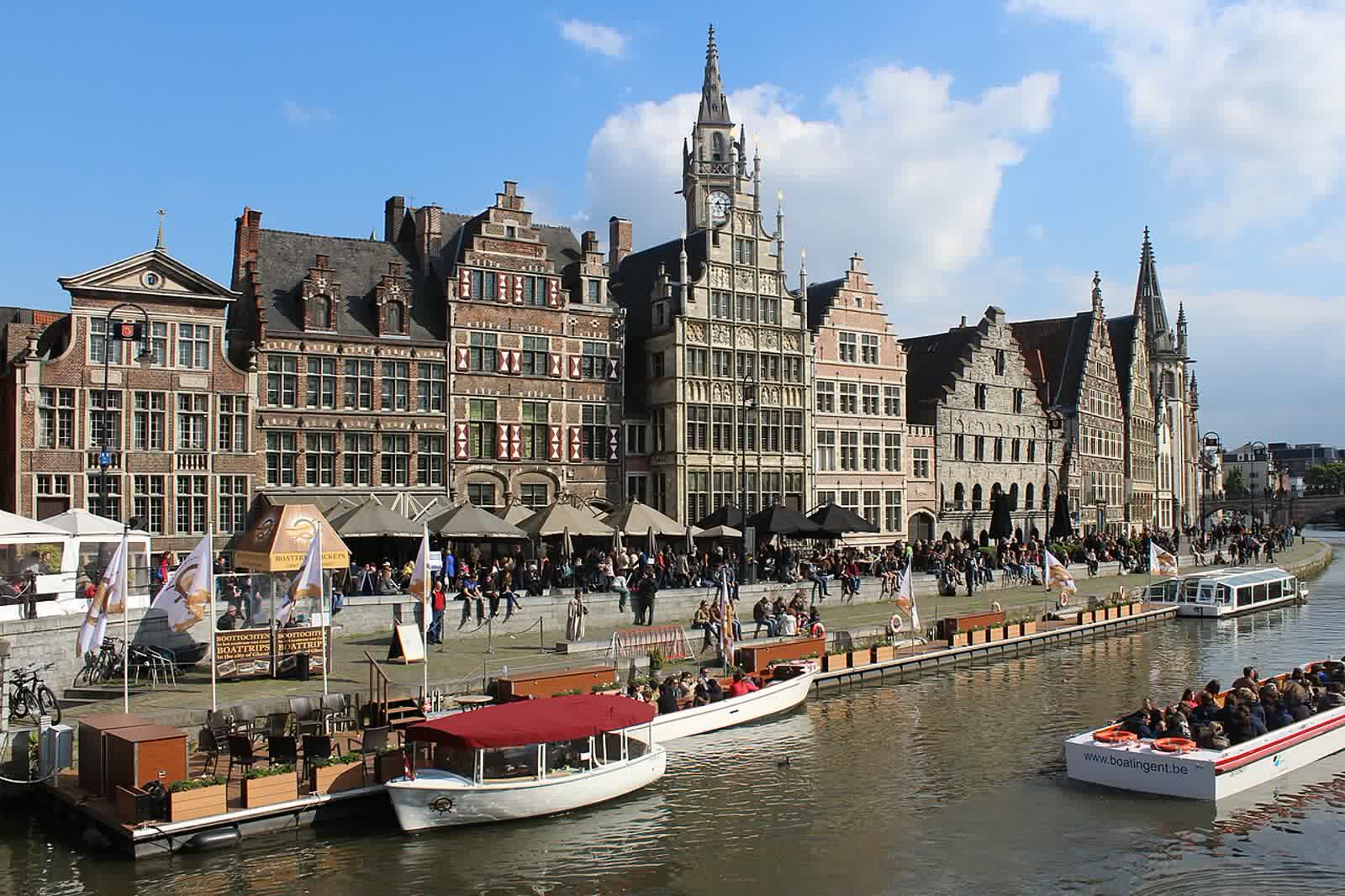
The waterfront is the image everybody takes home, and for once the cliche earns it. Along the Graslei and the Korenlei, the two quays facing each other across the water, the old guild houses line up in a row of stepped gables that catch the light late in the day. These were the commercial spine of a rich city, grain and shipping, the medieval version of a financial district, and they’re still there because people kept finding uses for them. I’ll say the plain opinion now. Ghent’s waterfront beats Bruges’s more famous canals, and the evidence is the students sitting on the stone edge of the Graslei with beers and bikes, using the seven-hundred-year-old quay as furniture. Beauty that’s still load-bearing hits differently than beauty behind glass.
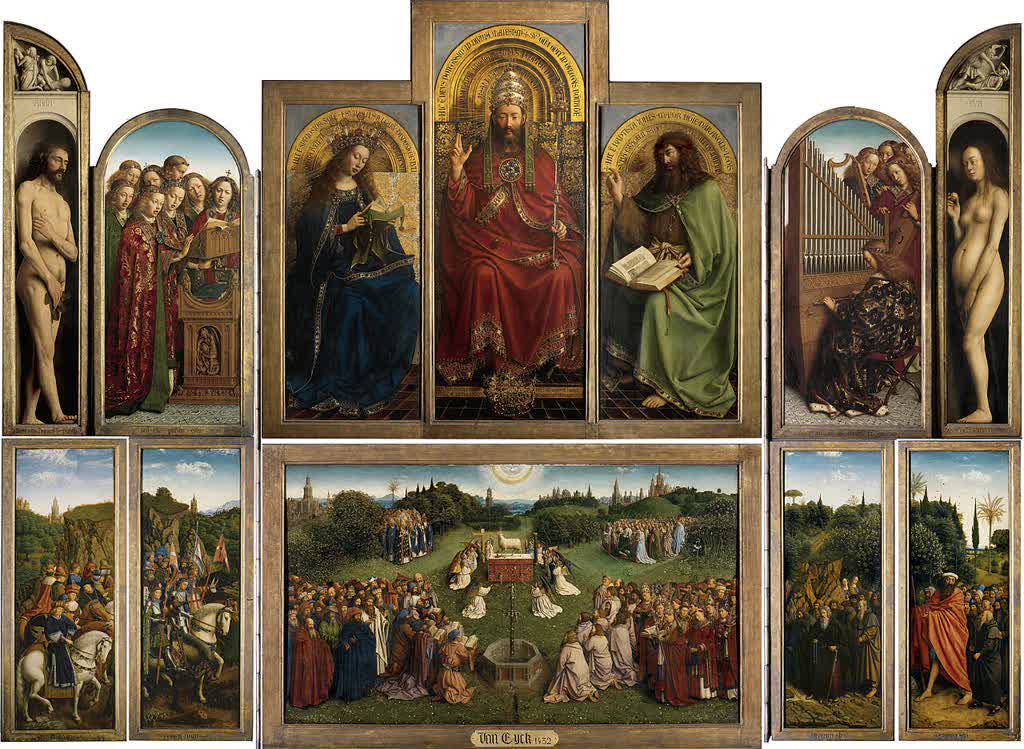
Above all of it sits Sint-Baafskathedraal, and inside it the reason plenty of people fly to Belgium at all: the Ghent Altarpiece, Jan and Hubert van Eyck’s Adoration of the Mystic Lamb, finished in 1432. It’s one of the founding objects of oil painting, a folding panel of astonishing detail, and it has survived fire, theft, and a Nazi salt mine, with one lower panel stolen in 1934 and never recovered. Here’s my confession, and it costs me something to make it. I don’t trust my own reaction to famous paintings until I’m in front of them, and I’ve been let down before, standing bored in front of a masterpiece while everyone around me performed awe. So I can’t tell you the altarpiece will move me. I only know that not going to find out feels worse than the risk of being unmoved.

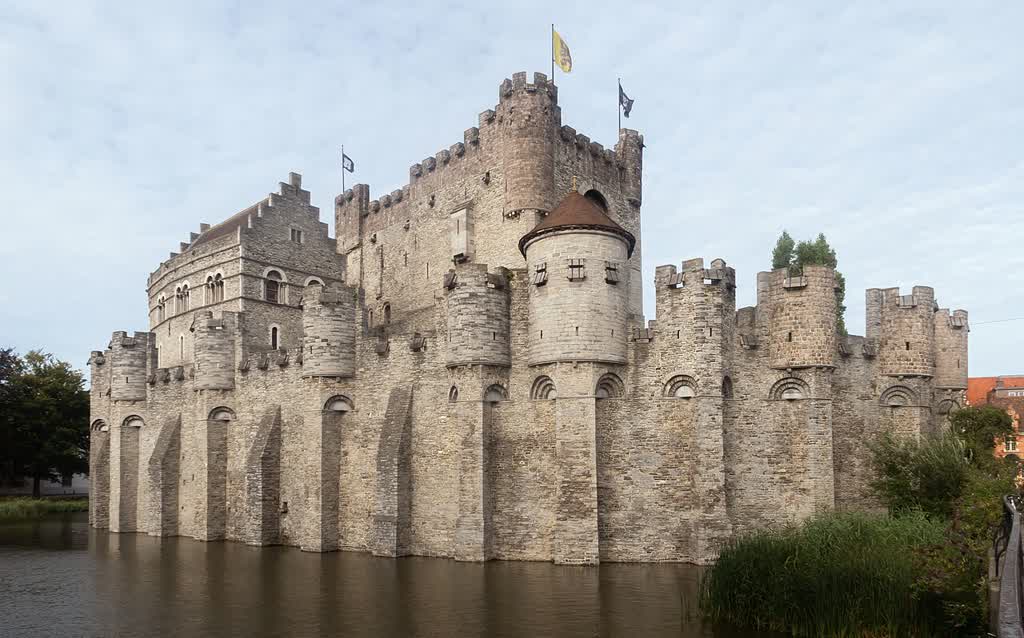
The castle is where Ghent’s whole personality shows. Het Gravensteen, the castle of the counts, a proper stone fortress with a moat right in the center of town, was very nearly demolished. For a stretch it was a cotton mill, because Ghent in the nineteenth century was a textile monster, the Manchester of the continent, spinning and weaving at industrial scale while the castle rotted into a factory and then into houses. The city considered clearing the lot. Instead they restored it, and at one memorable point local students occupied the thing and pelted the police with fruit from the ramparts. That is the correct spirit for a monument. Not reverence. Use.

Which brings me back to the textile bones under everything, the part that keeps Ghent honest. This was a working town before it was anything picturesque, cloth money built the guild houses on the Graslei, and the mills that came later are the reason the place has grit under the gables instead of only polish. Cities that were only ever beautiful tend to stay that way, hollow and maintained. Cities that were beautiful and then had to earn a living tend to keep an edge, and the edge is what I want to feel underfoot.
I’ve mispronounced the name for years, by the way, saying it the English way, hard g, when the Flemish is closer to a soft rasped Gent. It’s a small thing. It’s also the small thing that tells a place you learned it from a distance, and I’d like to fix it in person, in a frituur, with someone correcting me over fries.
What stays with me is a day I already spent. Years ago I gave a free afternoon to Bruges instead, walked its lovely embalmed streets, and took the train back without ever getting off one stop later where the students and the barges and the dog on the tower were. I had the day. I spent it on the museum and skipped the city. I’d like that day back.
If you’re planning better than I did: Ghent sits in East Flanders, in the Flemish north of Belgium, roughly half an hour by train from Brussels and about twenty-five minutes from Bruges, so there’s genuinely no excuse. The nearest big gateway is Brussels Airport, with fast rail straight in. Go in late spring or early autumn, when the university’s in session and the city runs at full population rather than tourist idle, and the light on the Graslei is at its longest. One access note: the historic core is dense, cobbled, and built for bikes and feet, so stay central and walk, because a car in there is a liability you’ll spend the whole visit apologizing for.
Sources
- Photo: Martinvl, CC BY-SA 4.0 · Graslei waterfront
- Photo: Michielverbeek, CC BY-SA 4.0 · Het Gravensteen
- Ghent Altarpiece reproduction, Public Domain · Wikimedia Commons
- Boekentoren official site
- Visit Ghent: Graslei and Korenlei history
- Visit Ghent: Waterzooi
- Ghent Altarpiece (Wikipedia)
- Gravensteen (Wikipedia)
- The Just Judges panel theft (Wikipedia)
- Visit Ghent: Industrial history
- City of Ghent: Student population statistics
- Belgian Rail: Brussels–Ghent timetable
- City of Ghent: Castle of the Counts history